
Blog
October 14, 20268 min read
Executive Privacy in Luxury Addiction Treatment
Executive privacy rehab explained: confidentiality layers, work access, legal protections, and a vetting checklist before you choose a program.
Faith RecoveryRead
4.8 · 75 Google Reviews · Beverly Hills
Stress management relapse prevention explained: warning signs, the stages of relapse, coping strategies, and when to get professional support.
Faith Recovery
Editorial Team
Stress management relapse prevention explained: warning signs, the stages of relapse, coping strategies, and when to get professional support.
Relapse usually starts weeks before anyone picks up a drink or a drug. It begins with emotional strain that builds quietly, and unmanaged stress is one of the most common forces behind it. At Faith Recovery Center, a physician-led treatment center in Beverly Hills, we treat stress management relapse prevention as a daily clinical skill. Clients build it in detox, practice it in residential care, and keep using it through outpatient and aftercare.
Relapse prevention means the planned set of skills, routines, and supports you use to stay in recovery after substance use stops. Stress management is the part of that plan that keeps ordinary pressure from turning into cravings. This guide shows how that happens and gives you specific tools to interrupt it.
Stress doesn't cause relapse on its own, but it wears down the coping you already have. Many people used alcohol or drugs, at least partly, to blunt anxiety, grief, or exhaustion. When that option is gone and no replacement is in place, the old solution starts to look reasonable again. Psychological theories describe drug misuse as a coping mechanism to reduce stress, anxiety, tension, and withdrawal-related distress, which is why stress counts as a major trigger (Journal of Clinical Investigation).
Early abstinence makes this harder, because in the first weeks and months many people feel irritable, restless, and poorly rested. That distress is predictable and usually temporary, but it's still a real relapse risk period, so coping strategies need to be in place before it peaks.
Your stress response is the body's alarm system, and it raises heart rate, sharpens attention, and releases hormones such as cortisol. Short bursts of that alarm are useful, but chronic stress keeps it running for weeks or months. The National Institute on Drug Abuse describes how repeated substance use also changes the brain circuits that handle stress, reward, and self-control.
The effect is a nervous system that reacts more strongly to pressure and recovers more slowly. Researchers are still mapping the details, but the pattern is consistent enough to plan around. Stress tends to feel louder in recovery, and cravings often follow it. That's a sign of a system that's healing, not a sign of weakness.
Acute stress is a single event, such as an argument, a deadline, or a bad diagnosis. Chronic stress is the background load of money trouble, a strained relationship, caregiving, or a job you dread. Common causes of stress in recovery also include repairing relationships, returning to work, legal or financial cleanup, and grief over losses that substance use once numbed. Positive changes like a new job or a move can strain you too.
Clinicians often describe relapse as a process with three stages: emotional, mental, and physical (Coral Shores Behavioral Health). In emotional relapse, you aren't thinking about using, but you're isolating, sleeping badly, and bottling up anxiety. Mental relapse brings a tug-of-war, with romanticized memories, bargaining, and thoughts of using once. Physical relapse, the third stage, is the actual return to use. Stress management works best at the first stage, when the warning signs are emotional and the fix is still simple.
Triggers are the specific situations, emotions, or events that raise stress or the desire to use, such as payday, a certain friend, conflict at home, or loneliness on a Sunday night. Warning signs are the physical, emotional, and behavioral changes showing that your relapse risk is climbing (Mississippi DATC). You can't remove every trigger, but you can learn to notice warning signs early.
Signs of stress that often come before emotional relapse include skipped meals, shorter sleep, canceled support meetings, snapping at people, defensiveness when someone asks how you're doing, and negative thought patterns like "nothing I do matters." HALT is a quick check that catches many of them, so ask yourself a few times a day if you're hungry, angry, lonely, or tired. Each state lowers your tolerance for stress, and each one has a concrete fix, like food, a conversation, a call, or rest.
A single coping strategy rarely fits every situation, because the skill you need for a long workday isn't the one you need when a craving hits at midnight. We teach clients to rate their stress and scale their response to match it. Relaxation, time management, and a daily schedule are standard relapse prevention tools for building that kind of balance (PubMed Central).
The ladder protects you from two mistakes, treating a crisis like a bad mood and treating every bad mood like a crisis.
Different techniques work for different people, so try several and keep the ones you'll actually use. Some are everyday skills that lower your baseline stress, while others are in-the-moment skills for getting through a craving. Relapse prevention research separates general stress coping from skills aimed at temptation, and a person with effective coping strategies is less likely to relapse (PubMed Central).
Mindfulness and meditation train you to notice a thought or feeling without acting on it right away. Urge surfing applies that skill to cravings, letting you ride them out by observing thoughts and emotions without judgment (The Phoenix Recovery Center). You picture the urge as a wave, notice where you feel it in your body, and breathe slowly while it rises, peaks, and fades. It feels awkward at first and gets easier each time you practice it. Simple techniques like urge surfing, grounding, and meditation are easy to practice on your own (Merit Resources), and mindfulness-based relapse prevention programs combine them with traditional relapse prevention skills.
Physical activity burns off stress hormones and improves sleep and mood. You don't need a training program, since a brisk 20-minute walk when tension builds is a good start. At our estate, clients use the gym, pool, gardens, and tennis court, and yoga is part of the regular treatment schedule.
Related reading
Poor sleep lowers frustration tolerance and makes cravings feel more urgent, so it deserves the same attention as therapy. Keep fixed wake and bed times, avoid screens late at night, and limit caffeine after noon. A daily schedule and structured routine help balance your lifestyle and reduce the number of small decisions you face each day (PubMed Central).
Cognitive behavioral therapy teaches you to catch an automatic thought, check it against the evidence, and replace it with something accurate. For example, "I can't handle this job" might become "this week is hard, and I've handled hard weeks before." Journaling makes that practice concrete, and hobbies and creative tasks can help balance your lifestyle as well (PubMed Central). A short gratitude practice at night pulls attention away from threats and builds resilience over time.
Social support gives you a buffer that willpower can't, so pick three people you can text without explaining yourself and agree in advance on what a check-in call means. Group therapy, 12-step meetings, and alternatives like SMART Recovery or Refuge Recovery add peers who recognize warning signs quickly. For workplace stress, decide ahead of time how you'll leave work events, take breaks, and say no to drinks, and keep one support contact on call during demanding stretches.
Family therapy helps loved ones learn what support looks like, including how to notice withdrawal or irritability without policing or shaming. Grief and major life changes are easier to face when people around you know your plan.
Our Beverly Hills manor serves a maximum of eight patients at a time, so your clinicians know your stressors by name and history. Treatment plans draw on evidence-based therapies, including CBT, DBT, EMDR for trauma, and motivational interviewing. Yoga, mindfulness, art therapy, and nutrition support work on sleep, mood, and physical well-being alongside talk therapy.
Anxiety, depression, and trauma often drive stress-related relapse, so psychiatric care is part of treatment from the start. Our psychiatrist, Dr. Julio Meza, M.D., specializes in dual diagnosis and provides psychiatric medication management when it's indicated. Dr. Jason Giles, M.D., oversees medical detox and MAT protocols. Clients can move through detox, residential care, PHP, IOP, and aftercare without changing facilities. We're Joint Commission accredited, licensed by California DHCS (license 190130AP), and LegitScript certified.
A lapse is a single slip, while a relapse is a sustained return to old patterns. The biggest danger after a lapse is the all-or-nothing belief that you've already failed and might as well keep going. People who attribute a lapse to personal failure are likely to feel guilt and negative emotions that can drive further use (PubMed Central). Instead, stop, get somewhere safe, tell someone within 24 hours, and review what happened with your therapist. Treat it as information about which part of your plan needs strengthening.
If use continues, or if you've used alcohol or benzodiazepines heavily, withdrawal can be medically dangerous. Get a clinical assessment rather than trying to stop alone. SAMHSA's National Helpline is also available around the clock.
The 5 D's are delay, distract, de-catastrophize, deep breathing, and decide. You delay acting on the craving and distract yourself with an activity. Then you challenge the worst-case thought, slow your breathing, and consciously choose recovery. Different programs word them slightly differently, but the purpose is the same: buy time until the urge passes.
Mindfulness-based approaches have been studied for this use, and the National Center for Complementary and Integrative Health summarizes the research on meditation. Practices like urge surfing help people ride out cravings (The Phoenix Recovery Center), and they are easy to practice on your own (Merit Resources). Results differ between people. Mindfulness works best alongside therapy and a support network, not as a replacement for them.
It varies widely depending on the substance, your health, and your mental health. Sleep and mood often improve gradually over the first several months. If anxiety or depression stays high, that's a reason for a psychiatric evaluation, not something you should just push through.
Yes, loved ones can call our admissions team confidentially, and no doctor's referral is required. Many people are admitted within 24 to 48 hours after we verify their insurance at no cost.
Resilience comes from practicing these skills when stress is low, so they're automatic when it's high. If stress is already pulling you or someone you love toward substances, call Faith Recovery Center 24/7 at (844) 598-5573 for a confidential assessment and free insurance verification.
About the author
Helpful educational resources from Faith Recovery.
In this article
Continue reading
Executive privacy rehab explained: confidentiality layers, work access, legal protections, and a vetting checklist before you choose a program.
Residential treatment at Faith Recovery Center runs 30 to 90 days based on need. Here's how to sort which relationships support your sobriety and which ones wear it down.
Many clients at Faith Recovery Center are admitted within 24 to 48 hours of a first call, so the conversation with family often happens fast.
Most cravings crest within about 15 to 30 minutes, even though one in progress can feel permanent. If you can stay safe until the peak passes, the urge loses its grip.
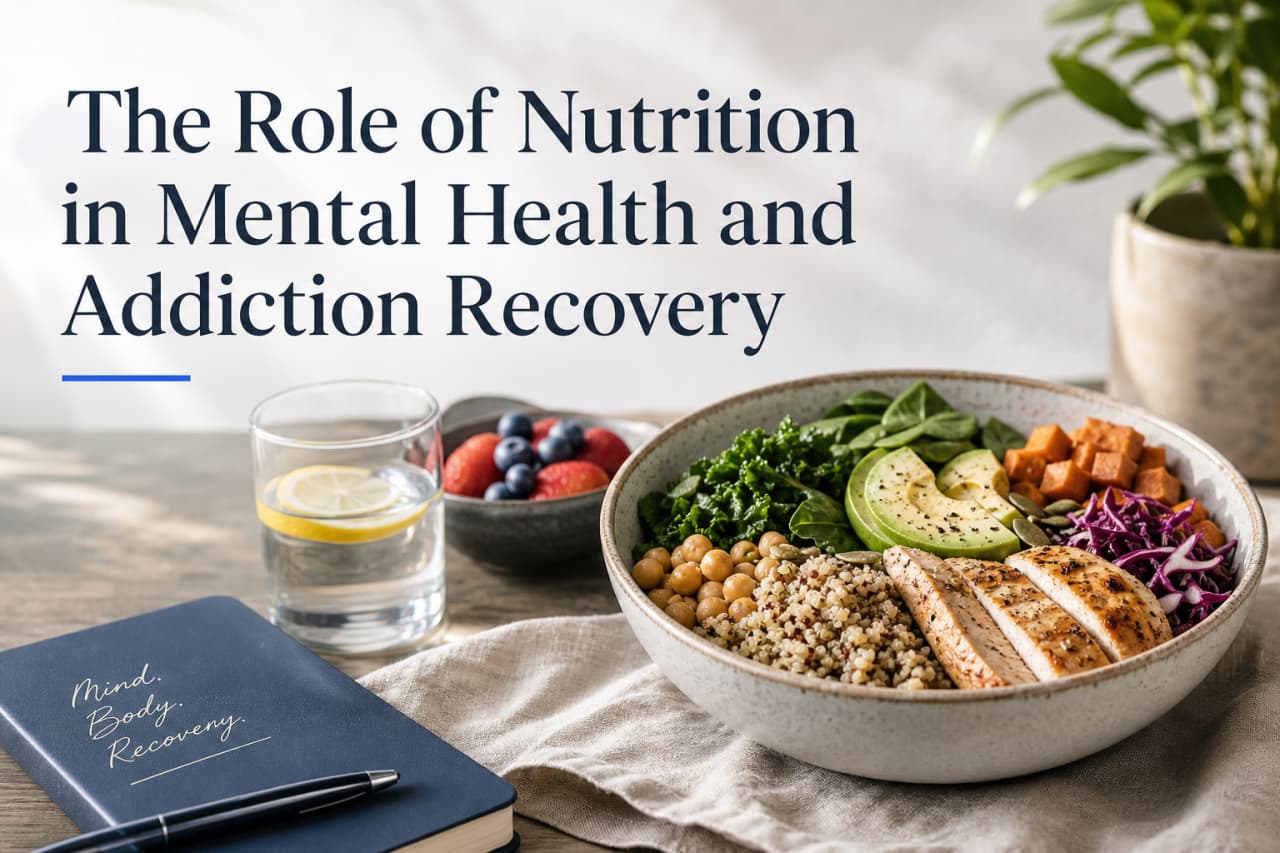
Substance use disorder can lead to malnutrition and vitamin deficiencies, and blood sugar swings from poor dietary choices can trigger cravings. Here is how to eat for recovery.

Exercise in rehab starts only after a physician clears it.
More from Blog
View allReady to take the next step
Faith Recovery Center offers confidential admissions, insurance verification, and evidence-based treatment in a private Beverly Hills manor — 24 hours a day.