Blog
October 17, 20266 min read
Holistic Anxiety Recovery: A Practical Order of Care
A sensible sequence for anxiety care, from medical evaluation and therapy to sleep, movement and daily habits, with the limits of each step.
Faith RecoveryRead
4.8 · 75 Google Reviews · Beverly Hills
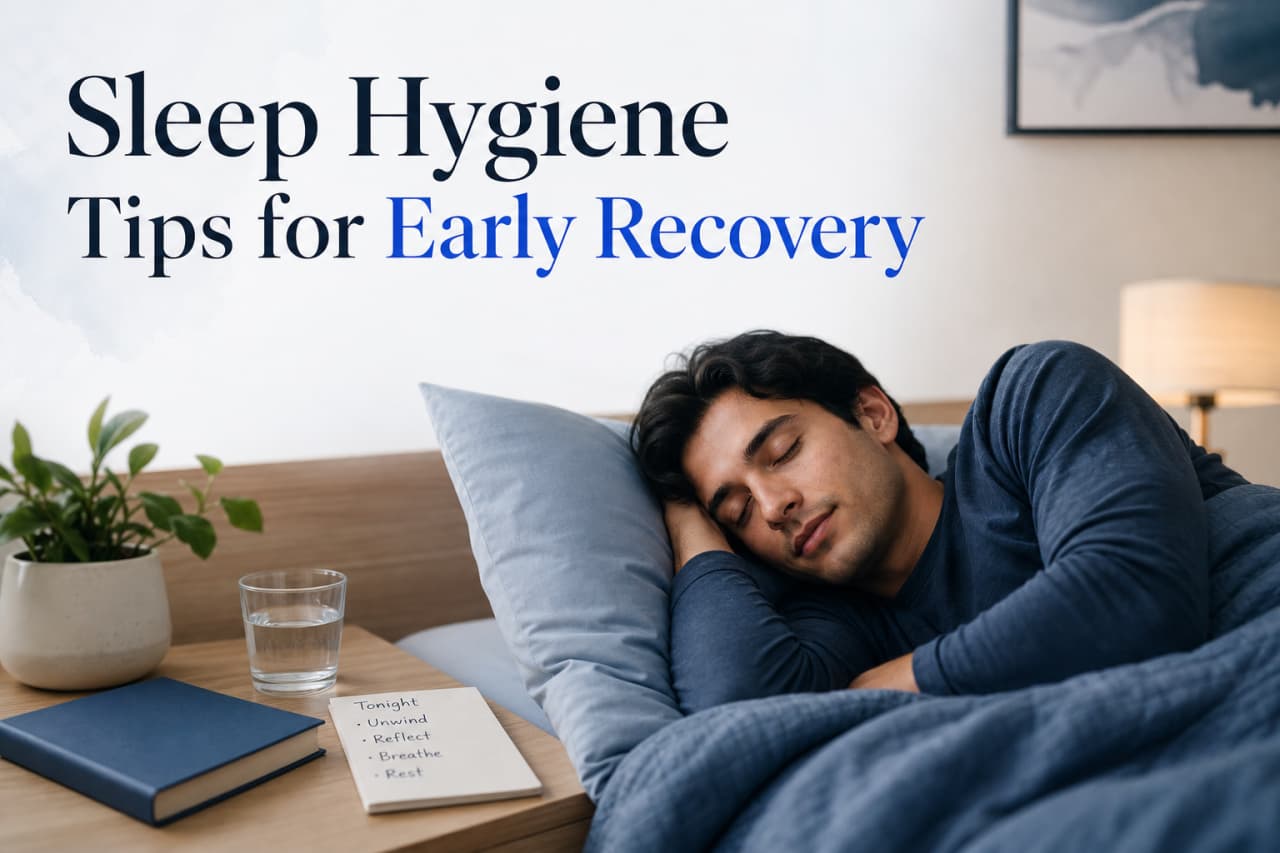
Poor sleep is a common complaint in early recovery. Here is which sleep habits to fix first, and when trouble sleeping means you need clinical help.
Faith Recovery
Editorial Team
Poor sleep is a common complaint in early recovery. Here is which sleep habits to fix first, and when trouble sleeping means you need clinical help.
Sleep hygiene recovery starts with a fixed wake time, a dark and cool bedroom, and a clear sense of when poor sleep needs a clinician. Poor sleep is one of the most common complaints in early recovery, and it's easy to dismiss until it starts wearing down your decisions. At Faith Recovery Center, we treat it as part of clinical care.
Sleep hygiene is the set of daily habits and bedroom conditions that shape how well you sleep, not just how long. According to one sleep resource, even someone who gets eight hours can have a disrupted sleep cycle and spend limited time in REM sleep. Another recovery resource reports that the CDC recommends adults 18 and older get no less than seven hours a night, so treat that as a floor rather than a guarantee of good rest.
Drugs and alcohol interfere with the four stages of sleep, so even when a substance seems to help you fall asleep, it keeps you from getting the full cycle. Withdrawal from opioids, benzodiazepines, stimulants, or alcohol can also bring insomnia, vivid dreams, or restless nights. Early in recovery, your brain is relearning how to sleep without the substance. How long that takes varies by substance, length of use, and mental health history.
One recovery resource states that even a few nights of too little sleep can lead to significantly higher levels of anxiety, depression, and suicidal thoughts. Another notes that increasing frustration can intensify cravings and deplete the resources you use to deal with them. A bad night doesn't cause a return to use on its own, but it makes every hard moment harder.
The relationship between sleep and mental health goes in both directions. People with anxiety or depression are more likely to have insomnia, and poor sleep can worsen the symptoms of both conditions. Sleep hygiene alone doesn't treat either one, but it gives treatment a better foundation.
The most commonly recommended habit is a fixed bedtime and wake time, kept even on weekends, vacations, and holidays. That regularity lets your body develop a trusted circadian rhythm. Shift workers will find this difficult, and a stable pattern within their own schedule still helps.
Any change to your schedule should be gradual. If you're so tired at the end of the week that you want to sleep in, try to limit it to about half an hour. A longer lie-in pushes your wake time around and makes Monday harder, and it won't fully make up for chronic sleep deprivation anyway.
A routine works because repetition becomes a signal. You might write in a journal, take a warm bath, brush your teeth, and go to bed, or try meditation, yoga, or stretching. Do the steps in the same order each night, and keep them few enough that you'll actually do them.
Aim for a bedroom that is dark, quiet, cool, and clutter-free. Blackout curtains, earplugs, a fan, or a white-noise machine can all help. Avoid screens for at least an hour before bed, because blue light can disrupt melatonin production and the content can keep your mind busy.
Use the bed only for sleep, and try not to eat or work in it. If you've been in bed 20 to 30 minutes without falling asleep, lying there longer is unlikely to bring sleep on. Get up, sit somewhere dim, and return when you feel sleepy.
Daily exercise of at least 30 minutes is a standard recommendation, and bright morning light helps you feel awake and alert. Hard workouts close to bedtime can leave some people wired, so test your own timing. Caffeine and nicotine are stimulants, and most people do better cutting them off by early afternoon. When you travel, keep your wake time as close to normal as you can and get outside in the morning.
Worrying about sleep creates the very alertness that blocks it. Turn the clock away so you can't watch it. Slow breathing, a body scan, or writing tomorrow's tasks on paper can quiet the loop.
Waking in the night is common in early sobriety. Possible causes include withdrawal effects, stress, pain, sleep apnea, or an untreated mood disorder, and it's worth consulting a healthcare provider to rule out underlying medical conditions.
Related reading
Don't change everything at once. A reasonable place to begin is the habit that seems to cost you the most sleep. Sources agree on the pieces, including a fixed wake time, screens off for the last hour, a dark, cool, quiet bedroom, and daily exercise. None of them ranks the pieces, so the order is yours to pick. Many people start with wake time because it anchors the rest, then add one change at a time and give each about a week before judging it.
Consider a habit problem if your sleep improves when you change one routine. Consider a clinical problem if you've kept good habits for several weeks and still lie awake, wake unrefreshed, snore with pauses in breathing, or feel low or anxious through the day. Talk to a doctor if poor sleep lasts about three weeks or affects daytime function or safety.
Our Beverly Hills residence holds a maximum of 8 patients, each in a private suite, so the environment is quiet and your clinicians know your sleep pattern. Medical detox provides 24/7 monitoring through withdrawal, and Dr. Jason Giles oversees medical protocols. Dr. Julio Meza, our psychiatrist, assesses anxiety, depression, and trauma that often sit under insomnia.
Daily structure, CBT, yoga and mindfulness, fitness, and chef-prepared meals all support a steadier rhythm. Residential stays typically run 30 to 90 days, followed by PHP, IOP, and aftercare planning when needed, with length individualized to your needs.
If sleep trouble is tangled up with cravings, alcohol or drug use, or a mood you can't shake, a treatment program can address all of it together. Cognitive behavioral therapy can help you identify and change negative thoughts and behaviors around sleep. If problems persist for more than a month, one UK mental health charity says CBT may be recommended. Faith Recovery Center is DHCS licensed, Joint Commission accredited, and LegitScript certified.
It varies by substance, length of use, and mental health history. Consistent habits and clinical support help, and a clinician can tell you what's typical for your situation.
One source cites the CDC recommendation that adults get no less than seven hours a night. Quality matters as well as hours, since even eight hours can leave you with limited REM sleep if the night is disrupted.
A short nap can take the edge off a rough night. If you nap, keep it brief and early in the day so it doesn't make falling asleep harder that night, and don't treat naps as a fix for weeks of poor sleep.
Yes. Caffeine is a stimulant and can stay active for hours, so most people sleep better stopping by early afternoon. If you're sensitive, stop earlier.
See one if poor sleep continues for about three weeks, if you snore loudly or stop breathing at night, or if low mood and anxiety come with it. Withdrawal-related insomnia also deserves medical attention, especially with alcohol or benzodiazepines.
If sleep is standing between you and stable recovery, call Faith Recovery Center at (844) 598-5573. Admissions is confidential and available 24/7, and we'll verify your insurance for free.
About the author
Helpful educational resources from Faith Recovery.
In this article
Continue reading
A sensible sequence for anxiety care, from medical evaluation and therapy to sleep, movement and daily habits, with the limits of each step.

Answers to common medical detox questions: withdrawal safety, medications, how long detox lasts, insurance, and what happens next at Faith Recovery Center.

Leaving residential treatment is the point where the structure of daily life drops away, which is why aftercare resources in Los Angeles deserve as much planning as treatment itself.

Many treatment centers keep a peer community open to former clients after discharge.
Meditation recovery tools work best when they target a specific problem, such as a craving at 6 p.m. or a spike of anxiety before a family call. Here is how to choose one.

Executive privacy rehab explained: confidentiality layers, work access, legal protections, and a vetting checklist before you choose a program.
Ready to take the next step
Faith Recovery Center offers confidential admissions, insurance verification, and evidence-based treatment in a private Beverly Hills manor — 24 hours a day.