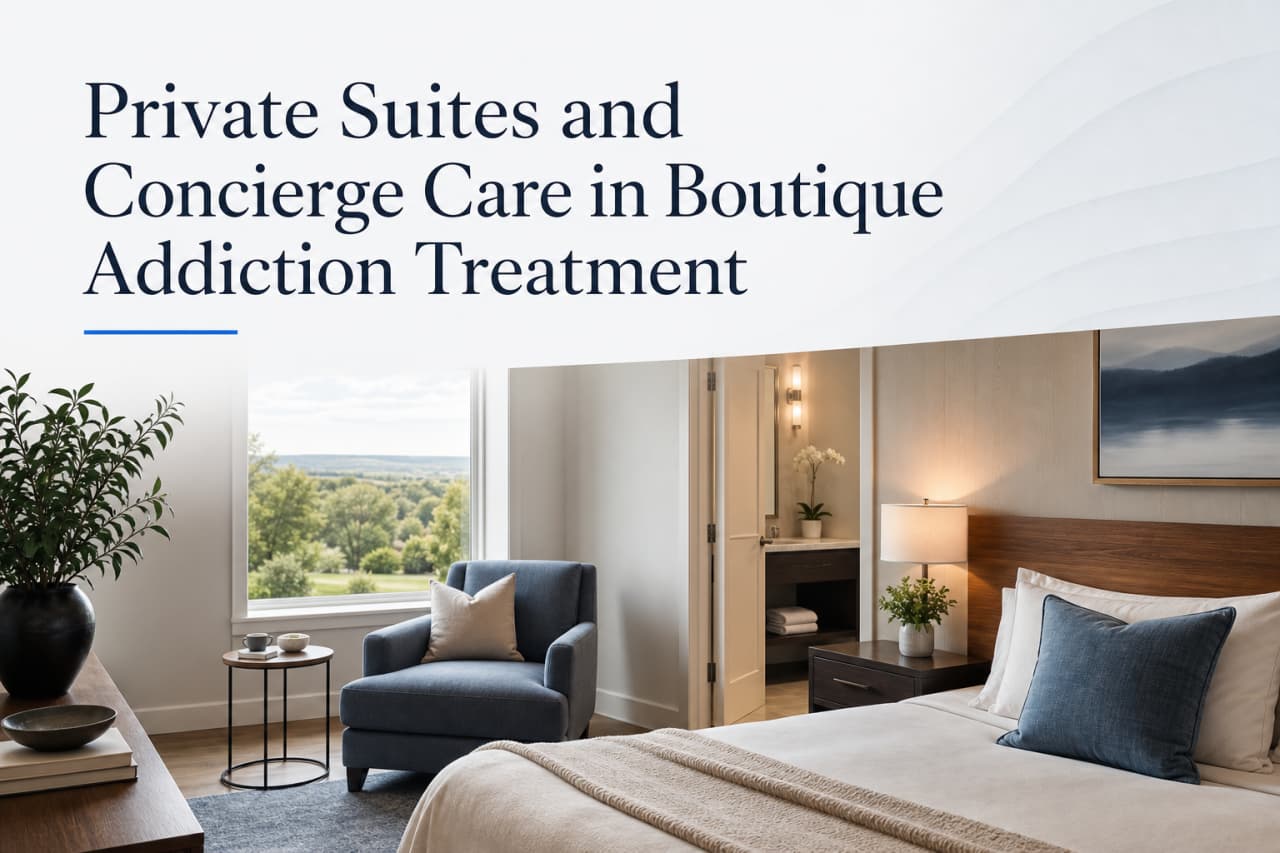
Private rehab suites are single-occupancy rooms, usually with their own bathroom, where you sleep, rest and decompress between therapy sessions. At Faith Recovery Center in Beverly Hills, private suites are the standard, and the house holds a maximum of 8 patients at a time. That combination matters more than any single amenity, because a bedroom is only one piece of what makes a setting private.
Below you'll find what a suite changes about treatment, how coverage works, and which questions separate a truly private setting from a marketing label.
What Are Private Rehab Suites, and Who Offers Them?
A private rehab suite is a room you occupy alone for the length of your stay, typically 30 to 90 days in residential care, with the bathroom attached or reserved for you. It gives you a door that closes, a bed no one else uses, and a place to take a phone call, journal or sleep without a roommate's schedule shaping yours. At Faith Recovery Center, that means a private suite in a single Beverly Hills residence that holds 8 patients at most.
Private rooms are available for drug and alcohol treatment, but availability varies widely. Many programs place two or more people in a room by default and offer single rooms as an upgrade or only when space allows.
Private Suite vs. Private Room vs. Shared Room
The terms get used loosely, so ask what each one means at the facility you're considering. A private room is a single-occupancy bedroom. A suite usually implies more, such as a private bathroom and a bit more space. A shared or semi-private room puts two people in one bedroom, often with a shared bathroom.
Semi-private is the in-between term you'll see most often. It generally means two people to a room, sometimes with a shared bath between adjoining rooms. Some listings say "private rooms available," which can mean guaranteed or merely possible. Confirm in writing whether a single room is promised from admission or assigned only if one opens up.
At Faith Recovery Center, private suites with private bathrooms are the standard rather than an add-on. No one shares a room or bathroom as a matter of course.
What Features Can Private Rehab Suites Include?
Features differ by facility, and photos can mislead. Treat any listing as a starting point and ask for specifics, because published claims about square footage, bedding or finishes are only as reliable as the source. We don't publish room dimensions, so we'd rather you see the space during your admissions conversation than rely on a number.
Room Layout, Bathroom, and Comfort Details
Look for a private bathroom, a bed you can actually sleep in, storage for 30 to 90 days of clothing, and a door that gives you real quiet. Layout matters in early recovery because sleep is often disrupted. A room you control, with your own light, temperature and routine, makes it easier to rest between sessions.
Our suites sit inside a private Beverly Hills residence built for recovery, so the hallways and living areas feel like a home rather than a clinical corridor.
Shared Amenities: Dining, Fitness, Pool, and Recreation
The suite is where you retreat, and the rest of the property is where you spend your day. The house has chef-prepared meals tailored to dietary needs, a pool and gardens, an on-site gym, a tennis court and outdoor lounge areas. Common rooms are set up for conversation.
Where clinically appropriate, scheduling can also accommodate personal appointments such as hair, beauty or medical visits. These comforts are worth weighing, but they shouldn't outrank the clinical questions below.
Do Private Suites Change the Clinical Side of Treatment?
A private suite doesn't make treatment more effective by itself, and a shared room doesn't mean worse care. The room changes your rest, your privacy and how exposed you feel in early recovery. The clinical level depends on staffing, licensing and the therapies delivered, which is why those are the things to verify first.
Some people also ask whether a private room is medically necessary for infection control. In substance use treatment, that's a question for the facility's medical team rather than a default assumption. If you have a specific health concern, raise it during assessment so the physician can advise on room placement.
Levels of Care: Detox, Residential, and Outpatient
Addiction treatment typically moves through stages. Medical detox is physician-supervised withdrawal management, often about 5 to 10 days. Residential treatment follows, typically 30 to 90 days, with full-time care at the facility. Partial hospitalization (PHP) and intensive outpatient (IOP) come next, often lasting one to three months or longer, and aftercare planning begins before you leave.
Those ranges are typical, and your clinical needs and progress set the actual length of stay. We offer every one of these levels at the same Beverly Hills address, so you can step down without changing facilities or losing the clinicians who know you.
Alcohol and benzodiazepine withdrawal can be medically dangerous, which is why detox should happen under supervision. Please don't attempt to taper at home.
Dual Diagnosis, Medication-Assisted Treatment, and Therapy Approaches
Many people in treatment also live with anxiety, depression, trauma, bipolar disorder or ADHD. Our psychiatrist, Dr. Julio Meza, M.D., integrates psychiatric care into the plan from arrival rather than referring it out afterward. Dr. Jason Giles, M.D., a board-certified physician, oversees medical protocols from detox assessment through residential care.
Medication-assisted treatment (MAT) is available when clinically indicated, coordinated between the medical and psychiatric teams. Whatever facility you choose, ask whether medication is available at every level of care, including after detox ends.
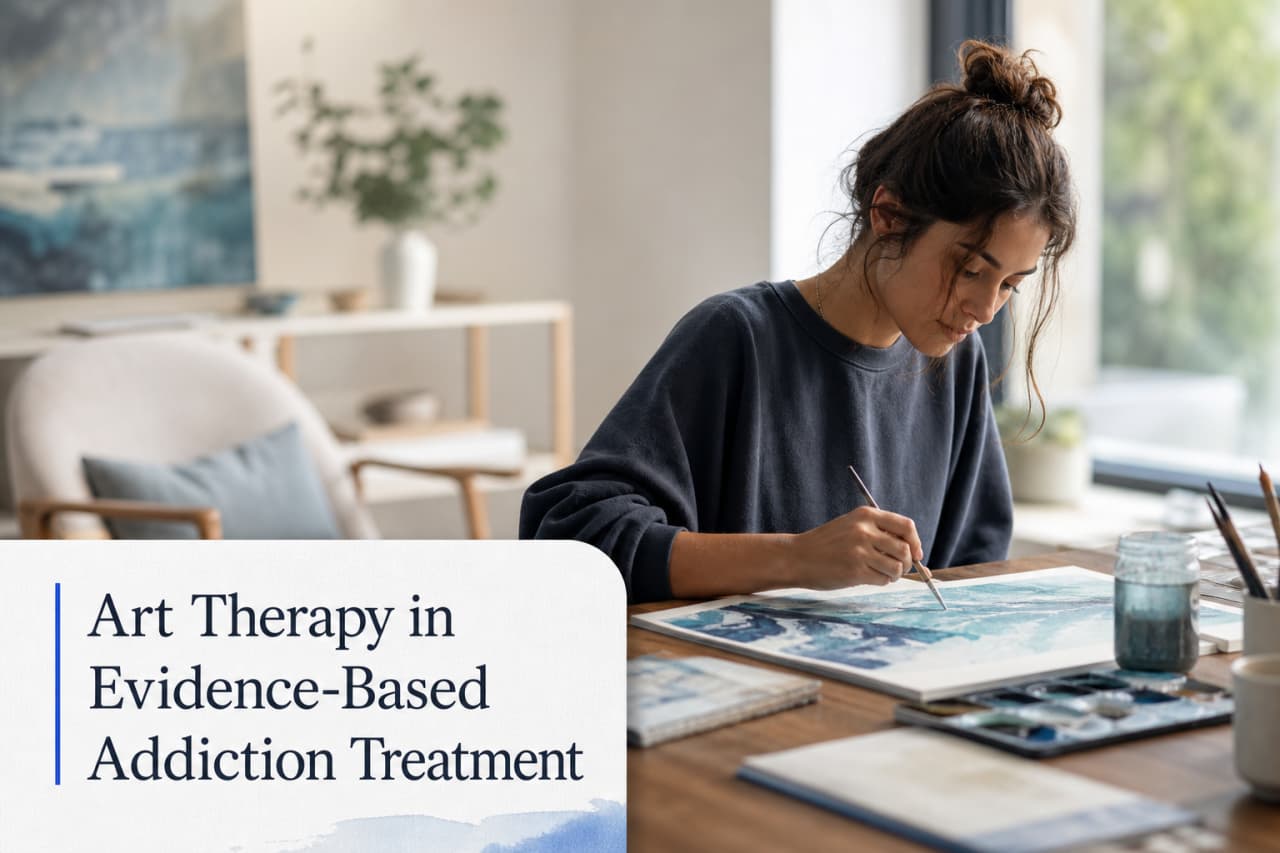
Therapy here includes individual sessions using CBT, DBT and motivational interviewing, EMDR and trauma-informed care, group and family therapy, relapse prevention, yoga, mindfulness and art therapy. With a maximum of 8 patients, clinicians know each person by name and history.
Private Rehab Suite Costs: Insurance, Verification and a House of 8
Cost varies with program length, clinical needs and insurance benefits, and we don't quote prices in articles. Published averages for residential rehab generally describe standard programs rather than private or luxury settings, so they'll understate what a boutique facility charges. Use them only as a loose baseline, since a house limited to 8 patients prices differently than a large campus.
Insurance is the bigger variable. We work with many private PPO plans, including Aetna, Ambetter, Anthem, Blue Cross Blue Shield, Carelon Behavioral Health, Cigna, Evernorth, Highmark, Humana, Luminare Health, Meritain Health, Optum and UnitedHealthcare. Sometimes insurance covers an entire stay, and private pay options are available. Coverage for a private room specifically depends on your policy, so it needs to be checked rather than assumed.
Medicare rules for skilled nursing and inpatient rehabilitation after surgery or injury, including room type and length-of-stay limits, are a separate system from addiction treatment. Check them with Medicare directly at Medicare.gov. We don't claim Medicare or Medicaid acceptance.
Verifying Benefits and Asking About Out-of-Pocket Costs
Verification is free and confidential with us, and it happens before you commit. Our team contacts your insurer, then tells you what your plan appears to cover. When you speak with any facility, ask about these points:
- Is a private room included in the quoted rate, or billed separately?
- What is your deductible, and how much of it is already met?
- What are the out-of-pocket maximum and any coinsurance for residential care?
- Is the facility in network, and what happens if it isn't?
- Which levels of care does the plan cover, and for how many days?
How to Choose a Private Rehab Facility: A Decision Checklist
Start with credentials and clinical staffing, then look at the setting. A beautiful room attached to thin clinical care is a poor trade. A private suite is worth it when privacy affects whether you'll stay, such as with sleep problems, trauma, a public profile or a need for quiet. If a shared room comes with stronger clinical care, take the clinical care.
Accreditation, Licensing, and Medical Staffing
Check three things. First, state licensing, and ours is California Department of Health Care Services license 190130AP. Second, accreditation, and we're Joint Commission accredited, which signals that a facility meets recognized quality and safety standards. It verifies standards rather than outcomes, and no accreditation guarantees recovery. Third, LegitScript certification, which verifies lawful and transparent operation.
Then ask who is on staff. Here, physicians and nurses are available around the clock, and all clinical roles are filled by licensed professionals. Ask any facility the same, and find out whether a physician and a psychiatrist are integrated into care or only on call.
Location, Travel, and Privacy Considerations
Our single facility sits in the hills above Beverly Hills, calm and discreet yet reachable from across Los Angeles County. Clients also travel from farther away. Some people want distance from home and others want family close, so weigh that honestly.
Privacy also depends on policy. Our calls are confidential, and we comply with HIPAA, so nothing is shared without your consent except as the law requires. A small census adds a practical layer, because with at most 8 people in the house you're not one of dozens of faces in the hallway. Ask any facility for its actual maximum instead of accepting a general claim of intimacy.
What Faith Recovery Center Offers
Faith Recovery Center is a physician-led boutique treatment center and dual-diagnosis program in one private Beverly Hills residence. Despite the name, it isn't a religious program. The name reflects hope and renewal, and spiritual practice is welcome if you want it, while treatment stays clinical and evidence-based.
The continuum runs under one roof, from medical detox through residential treatment, MAT, PHP, IOP, outpatient treatment and aftercare. We treat alcohol, opioids including fentanyl and heroin, cocaine, methamphetamine, benzodiazepines, prescription drugs, marijuana and other substances assessed case by case. Family support is part of recovery, and visitation typically begins after initial stabilization, on a schedule set with the clinical team.
Admissions follows five steps, beginning with a confidential call and insurance verification, then clinical assessment, arrival and orientation, and the start of treatment. Many clients are admitted within 24 to 48 hours of the first call, and same-day admission is sometimes possible depending on availability and clinical situation. No doctor referral is required, and family members can call on your behalf.
Is a Private Suite Right for You? Questions to Weigh
A private suite tends to help most when rest, privacy or emotional safety are barriers to engaging in treatment. People with trauma histories, severe anxiety, demanding careers or a need for discretion often name it as a deciding factor. It matters less if your main concern is clinical depth, which is why you should compare staffing and therapies first.
Put a few questions to yourself and to any facility. Consider whether you sleep better alone, and whether a roommate would make you less likely to speak openly in therapy. If discretion is your priority, ask what the facility does to protect it. Check that the program treats co-occurring mental health conditions, and get the private room guaranteed in writing. At Faith Recovery Center, those answers start with a house of 8 people and private suites as the standard.
Ambivalence is normal. You can call more than once before deciding, and admissions is built to be non-pressuring.
Frequently Asked Questions About Private Rehab
Do private rehab suites offer the same level of care as shared rooms?
The room type doesn't set the level of care. Clinical care depends on staffing, licensing and therapy, so compare those directly. A private suite changes your privacy and rest, not the medical standard. At Faith Recovery Center, private suites sit alongside physician-led, 24/7 clinical support.
What is the difference between private and semi-private rooms in rehab?
A private room holds one person, while a semi-private room holds two and may share a bathroom. Wording varies by facility, so ask whether a single room is guaranteed. Our standard is a private suite with a private bathroom.
Can you request a private room in short-term rehab after surgery?
Often you can request one, but it isn't always guaranteed, and coverage differs from addiction treatment. Ask the facility and your insurer, and contact Medicare directly if you're covered by it. For addiction care, we can discuss room placement during admissions.
Are private rehab suites available for drug and alcohol treatment?
Yes. Many luxury and boutique programs offer them, and ours does as the standard for alcohol and drug treatment, including medical detox, residential care and dual-diagnosis support.
Does insurance pay for a private room in rehab?
It depends on your plan, which is why verification matters. Some plans cover a stay in full, and some leave you with a share of the cost. We verify benefits for free and tell you what we find before you commit.
Does Medicare cover a private room in a skilled nursing rehab facility?
Medicare rules on room type and stay length are separate from addiction treatment, and they depend on medical necessity. Check the details at Medicare.gov or by calling 1-800-MEDICARE. We don't claim to accept Medicare.
What are the three types of rehabilitation facilities?
Common categories are inpatient or residential facilities, outpatient programs, and skilled nursing or physical rehabilitation settings. Addiction care typically uses the first two. We provide detox, residential, PHP, IOP and outpatient care.
What is the 3 hour rule for inpatient rehabilitation?
It's a Medicare criterion for inpatient rehabilitation facilities, generally referring to about three hours of therapy a day for qualifying patients. It applies to physical rehabilitation, not addiction treatment, so confirm current rules with Medicare.
Where to Find Help and Next Steps
For national resources, the SAMHSA National Helpline offers free, confidential referrals at 1-800-662-4357, and NIDA publishes plain-language information on treatment. If you want to see whether a private suite at Faith Recovery Center fits your needs, call (844) 598-5573 at any hour. We'll verify your insurance for free, answer your questions about the suite and the clinical program, and let you decide at your own pace.
“TIP: Ready to talk it through? Call (844) 598-5573 to speak with admissions confidentially, or ask us to verify your insurance first.”