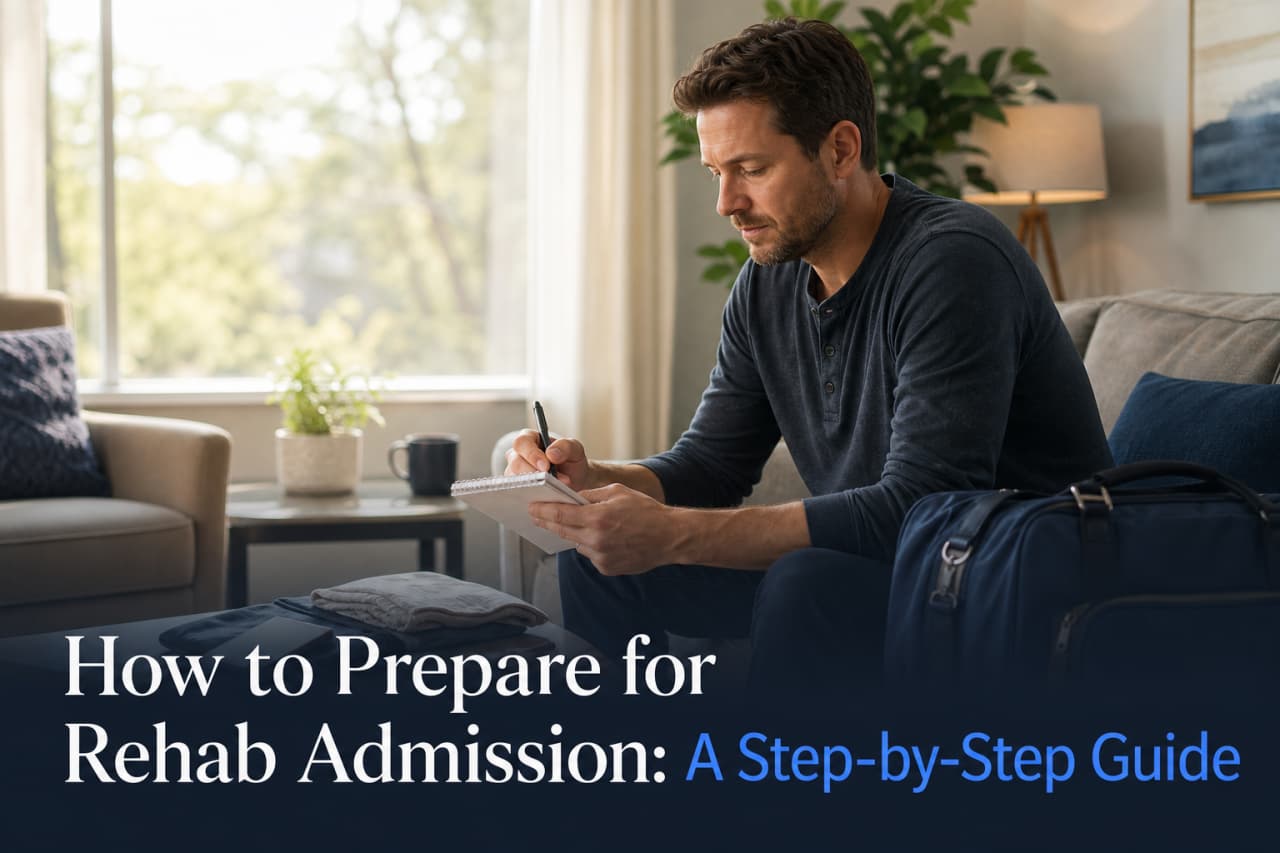
Many people who call Faith Recovery Center are admitted within 24 to 48 hours of that first conversation, so most of the work to prepare for rehab admission happens in a very short window. The list is shorter than it looks. You need a confirmed level of care, an answer on insurance, coverage for your job and household, a small bag, and a safe plan for the hours before you arrive.
This guide covers each piece in the order it usually matters, for the person entering treatment and for family members helping from outside. Every facility runs admissions a little differently, so treat it as a framework and confirm details with the center you choose.
Why Preparing for Rehab Admission Matters
Residential care at our Beverly Hills facility typically lasts 30 to 90 days, and that length is the main reason preparation matters. A missed rent payment, an unanswered email from your manager, or a dog with no one to feed it can pull your attention out of therapy and back toward home.
Preparation also affects safety. The clinical team builds your treatment plan from what you tell them on day one, including what you use, how much, and which medications you take. Accurate information going in means a safer detox and a plan that fits you from the start.
Rehab Admission Timeline: What to Do and When
The order below reflects what tends to cause delays. Insurance and the clinical assessment come first because they decide where you go and when, and logistics follow.
Right After You Decide: The First 24 to 72 Hours
Call admissions first. At Faith Recovery Center that call is confidential, carries no obligation, and can come from you or from a loved one acting on your behalf, with no doctor's referral required.
During the call we gather your insurance information, run a free verification of benefits, and complete a clinical assessment by phone. Once you know your recommended level of care and likely start date, notify your employer and line up help at home. If admission is same-day or next-day, these steps compress into a few hours, and our team can help you prioritize.
The Week Before Admission
With more lead time, settle bills, sign any leave paperwork, write out your medication list, and pack. Tell the people who need to know. Keep your use steady rather than cutting down on your own, for reasons covered in the detox section below.
Preparing for the Admissions Assessment
An admissions assessment is a structured conversation about your substance use, mental health, and medical history. It is not a test or a judgment of your character, and it does not commit you to anything. Its purpose is to recommend the right level of care, whether that is medical detox, residential treatment, a partial hospitalization program, or intensive outpatient.
Expect questions about which substances you use, how often and how much, when you last used, any past withdrawal symptoms or seizures, previous treatment, current prescriptions, and mental health history such as anxiety, depression, trauma, or bipolar disorder. Approximate answers are fine. A rough honest estimate helps more than a precise number shaded toward looking better.
Information and Documents to Have Ready
Gather a government-issued photo ID, your insurance card (photos of the front and back work for the call), and a written list of every prescription with dose and prescriber. Add emergency contacts on paper, any medical or psychiatric records you can get easily, and court or probation paperwork if treatment is court-ordered.
The paper contact list matters more than people expect. Phone access is often limited early in treatment, and few people have family numbers memorized anymore. One sheet with names, numbers, your employer's HR contact, and your pharmacy saves real frustration.
Questions to Ask Admissions Before You Commit
The admissions call runs both ways. You are choosing a facility, so ask whether it is state licensed and accredited, whether medical detox is on-site with 24/7 medical staff, and whether a psychiatrist is on the team for co-occurring disorders. Ask how many patients are in treatment at once, what your insurance will likely cover, when family can visit, what the phone rules are, and what happens after discharge.
For reference, Faith Recovery Center is licensed by the California Department of Health Care Services (license 190130AP), accredited by The Joint Commission, and LegitScript certified. We treat a maximum of eight patients at a time.
Check Insurance Coverage and Plan Your Finances Before Day One
Verify coverage before admission, not after. Under the Affordable Care Act, substance use disorder treatment is an essential health benefit, which you can read about on HealthCare.gov. Coverage still varies widely by plan, so a verification call is the only reliable answer.
We run that verification for free and contact your insurer directly. If you prefer to call yourself, write down the representative's name and a reference number, and ask whether the facility is in-network, whether residential care needs pre-authorization, and how many days of detox and residential care are covered. Also ask about your deductible, how much you have met this year, and your coinsurance and out-of-pocket maximum.
We work with many PPO plans, including Aetna, Anthem, Blue Cross Blue Shield, Cigna, Optum, and UnitedHealthcare. Sometimes insurance covers an entire stay, and private pay is available. Costs depend on program length, clinical needs, and benefits, so we won't quote a figure before verification.
For bills at home, set up autopay for rent or mortgage, utilities, phone, and car payments before a 30 to 90 day stay begins. If someone you trust will handle mail or finances, decide that now, and tell creditors in advance if a payment could run late.
Handle Work, Family, and Legal Responsibilities
With a stay of 30 to 90 days ahead, these arrangements come first. Settling responsibilities before you arrive lets your attention stay on recovery instead of your inbox.
Telling Your Employer and Arranging Time Off
Talk with HR before you talk with your manager, if possible. You generally don't have to share your diagnosis, only that you need medical leave. The Family and Medical Leave Act can provide up to 12 weeks of job-protected, unpaid leave, but eligibility depends on your employer's size, how long you've worked there, and hours worked. Not everyone qualifies. The U.S. Department of Labor explains the requirements, and your HR department can confirm your status.
Our admissions team can discuss medical leave documentation and coordinate timing with work or school before you arrive.
Arranging Child Care, Pet Care, and Household Needs
Write down children's routines, school contacts, pickup times, and medical information for whoever will step in. Choose a pet caregiver and leave feeding instructions and your vet's number. Ask someone to collect mail, water plants, and check the house.
If your admission is court-ordered, tell admissions immediately and bring your paperwork. Ask your attorney or probation officer what reporting the court expects, and sign releases so we can confirm your attendance. Other legal obligations, such as upcoming court dates, need to be raised with your attorney before you check in.
What to Pack for Rehab and What to Leave at Home
Pack light and confirm with the facility, because rules differ between programs. Faith Recovery Center provides a detailed packing list on admission, and it takes priority over anything general you read online.
Essentials to Bring
Plan on comfortable clothing for 30 to 90 days of wear in layers, with workout clothes, plus alcohol-free hygiene products, photo ID, insurance cards, a small amount of cash, your paper contact list, and a notebook. Prescribed medications go in their original labeled bottles.
Bring prescription medication in original pharmacy packaging with your written dosage list. The medical team reviews everything and decides what continues. Ask admissions before packing over-the-counter products, vitamins, or supplements.
Items Most Facilities Prohibit
Leave alcohol, drugs, non-prescribed medications, and valuables at home. Many programs also restrict mouthwash, cologne, or hand sanitizer containing alcohol, because these can be misused or complicate monitoring. Check your facility's specific list before you pack.
Detox and Physical Preparation: Why Not to Attempt a Last Binge
A final binge before admission is common, and it is risky. Tolerance can shift quickly, and heavy use right before intake makes withdrawal harder to predict. If a few days remain before your start date, keep things steady and call us if things get hard.
Don't stop alcohol or benzodiazepines abruptly on your own. Withdrawal from both can cause seizures and can be life-threatening, which is why medical supervision matters. The National Institute on Alcohol Abuse and Alcoholism describes alcohol use disorder as a medical condition for this reason.
“WARNING: If you have shaking, confusion, hallucinations, or seizures while cutting back, call 911 or go to an emergency room.”
Most people with physical dependence start with medical detox, which at our facility often lasts about 5 to 10 days under physician oversight. Tell us exactly what you use, including amounts, because that honesty shapes your detox protocol.
Preparing Mentally and Emotionally
Ambivalence is normal. Many people call several times before deciding, and that is fine. You don't need to feel ready to benefit from treatment, only willing to show up.
Addressing Common Fears and Setting Realistic Expectations
Most fears center on withdrawal, privacy, and losing control of daily life. Detox is medically managed with 24/7 monitoring, and your information is protected under HIPAA and not shared without your consent. Phone access in the first days is often limited so you can stabilize, and family visitation typically starts after that initial period.
The first days focus on stabilization and assessment. Structured therapy, including individual work, group sessions, CBT, and DBT, builds from there. Some days will feel productive and some won't, which is ordinary in recovery.
Talking to Loved Ones and Building Your Support System
Tell a small circle of people you trust. A short, direct message works. You are getting treatment, you'll be unavailable for a while, and here is who to contact. You don't owe anyone a full explanation.
Family members often want to help but don't know how, so give them concrete jobs like handling the mail or checking on the kids. Family therapy and education are part of our programming, so loved ones have a place in the process too.
How Faith Recovery Center Handles Admission and Treatment
Our admissions process has five steps: a confidential call, free insurance verification, a clinical assessment, arrival and orientation in your private suite, and the start of treatment. Care happens at a single private manor at 2200 Coldwater Canyon Dr in Beverly Hills.
Because we treat no more than eight patients at a time, the clinical team knows your history before you settle in. Dr. Jason Giles, a board-certified physician, oversees detox and medication-assisted treatment protocols, and Dr. Julio Meza, a psychiatrist, leads care for co-occurring mental health conditions. You can move through detox, residential care, and PHP or IOP without changing facilities or losing your team.
Despite the name, we are not a religious program. The name reflects hope and renewal. Spiritual practice is welcome if you want it, and all treatment is evidence-based.
Readiness Self-Check: Are You Prepared for Admission Day?
Before you leave, confirm that insurance is verified and costs discussed, your arrival time is set, and your employer or school knows. Children, pets, and home should be covered, bills on autopay, and medications packed in original bottles with a written list. Pack your ID, insurance card, and paper contact list, and arrange a ride.
If a few items are unfinished, come anyway. Admissions can help with the rest, and delaying care for a perfect checklist rarely helps.
Plan Ahead for Aftercare
Aftercare planning starts before discharge, not after. Your team builds a relapse-prevention plan that may include outpatient care, ongoing therapy, sober living referrals, and support groups such as AA or SMART Recovery. Think now about where you'll live afterward and who will support your recovery, since much of it depends on what happens once you're home.
Frequently Asked Questions About Preparing for Rehab
Do I need medical detox before a residential rehab program?
If you are physically dependent on alcohol, opioids, or benzodiazepines, you likely will. The clinical assessment decides this. At our facility, detox and residential care happen under one roof, so you step directly from one to the other.
Is it dangerous to stop drinking on my own before admission?
It can be. Sudden alcohol withdrawal can cause seizures and delirium in heavy drinkers. Keep your use steady and let the medical team manage withdrawal after you arrive.
Will I have my phone during the first week?
Phone access is often limited during early stabilization. The specific policy is explained at intake, which is why a paper contact list is worth packing.
Can I use FMLA to protect my job during rehab?
Possibly, if you and your employer meet the eligibility requirements. Confirm with HR or the Department of Labor, and ask our team about medical leave documentation.
Does verifying insurance guarantee admission or coverage?
No. Verification tells you what your plan is likely to cover, and admission depends on the clinical assessment and availability. It remains the best way to avoid surprise bills.
Talk to Admissions Today
Faith Recovery Center's admissions line is open 24/7 at (844) 598-5573, and insurance verification is free and confidential. You or a loved one can phone with questions and decide when you're ready.