Heavy drinking can cause B vitamin deficiencies, and low levels can lead to anemia and neurological problems such as "wet brain," a syndrome that stops the brain from writing new memories (Avery Lane). Physicians treat nutrition in recovery as part of medical care for exactly that reason. At Faith Recovery Center, a physician-led program in Beverly Hills, meals and nutritional assessment are part of treatment from the first day of medical detox.
The sections below cover how substance use disrupts nutrition, which nutrients run low most often, how food affects mood and cravings, and when you or someone you love should get professional help with eating.
Why Nutrition Matters in Addiction Recovery: 3 Ways Substance Use Drains the Body
Substance use damages nutrition in three main ways. People eat less or eat poorly while using, the substance itself can interfere with how the gut absorbs and the liver processes nutrients, and the body burns through certain vitamins and minerals faster while it is under chemical stress. One treatment provider summarizes the pattern as suppressed appetite, altered metabolism, and impaired nutrient absorption (River Rock Treatment).
The result shows up in both body and brain. Physical health suffers through weakened muscles, a strained immune system, and slower tissue repair. Brain function suffers because neurotransmitters like serotonin and dopamine are built from amino acids and depend on vitamins to form. When those raw materials run low, mood swings, poor sleep, and foggy thinking get harder to separate from withdrawal itself, and nutritional gaps can worsen symptoms of depression and anxiety during treatment (The Recovery Village).
Food won't cure a substance use disorder, and no diet guarantees long-term sobriety. What proper nutrition can do is remove a set of physical stressors that make early recovery feel worse than it needs to.
How Substance Use Disrupts Nutrition
The pattern differs by substance, so a good nutrition plan starts with what someone was using, for how long, and alongside what other health conditions.
Effects of Alcohol, Opioids, and Stimulants on the Body
Alcohol irritates the stomach lining and can kill off the mucosal lining and beneficial bacteria in the small intestine that break down food and absorb its nutrients (Tranquil Shores). It also adds calories with almost no nutritional value, so a person can maintain weight while becoming malnourished. Over time, alcohol strains the liver, which is where many vitamins are stored and activated. Fatigue, irritability, and confusion in early alcohol recovery often have a nutritional component alongside the withdrawal itself.
Opioids slow the digestive tract, and chronic constipation is one of the most common complaints. Appetite often drops, and many people rely on sugary, low-fiber foods that are easy to eat. Long-term opioid use has also been linked to low magnesium, a mineral that supports muscle and nerve function (Waterside Recovery). During opioid withdrawal, nausea, vomiting, and diarrhea can quickly deplete fluids and electrolytes.
Stimulants like cocaine and methamphetamine suppress appetite, sometimes for days at a time, which leads to inadequate calorie intake and poor nutrient processing (The Recovery Village). Significant weight loss, muscle loss, and dental problems that make chewing painful are common. The rebound after stopping often brings intense hunger, which creates its own problems.
Common Nutritional Deficiencies in Early Recovery
In people recovering from alcohol use disorder, thiamine (B1) deficiency is the hallmark concern, and pyridoxine (B6) and folic acid are also frequently low (Bold Health). B12, magnesium, and zinc round out the usual list. These nutrients support nerve function, red blood cell production, and the enzyme reactions the brain relies on. The National Institute on Alcohol Abuse and Alcoholism describes how alcohol interferes with nutrient absorption and use.
Across substances, low protein, vitamin D, iron, and omega-3 fatty acids come up often, along with dehydration. Symptoms overlap heavily with withdrawal and depression, so blood work and a medical assessment are more reliable than guessing. Please don't self-diagnose or start high-dose supplements without a clinician's input.
Key Nutrients That Support Healing
A balanced diet in recovery comes from steady amounts of the basics, eaten often enough that the body stops running on empty. Exotic superfoods and expensive powders add little.
Macronutrients: Protein, Complex Carbs, and Healthy Fats
Protein supplies the amino acids the brain uses to rebuild neurotransmitters, and it also helps stabilize blood sugar and ease cravings (Honeycomb Recovery). Tryptophan is a building block of serotonin, and tyrosine feeds dopamine production. Eggs, fish, poultry, Greek yogurt, beans, and lentils are practical sources, and including some protein at every meal matters more than hitting a precise number.
Complex carbohydrates, like oats, brown rice, sweet potatoes, and other whole grains, release glucose slowly. That gives the brain a steady fuel supply instead of the spike and crash that refined sugar produces.
Healthy fats rebuild cell membranes throughout the brain and nervous system. Salmon, sardines, walnuts, flaxseed, avocado, and olive oil are good choices, and fatty fish supplies omega-3 fatty acids that may help with depression by reducing inflammation and supporting neurotransmitter uptake (The Recovery Village).
Micronutrients, Antioxidants, and Hydration
Vitamins and minerals are the tools that let the body use the macronutrients above. Leafy greens supply folate and magnesium. Colorful fruits and vegetables carry antioxidants that help repair cellular damage from substance use, and whole grains and legumes add B vitamins and fiber. B vitamins support energy production and brain health, while vitamin C supports immune function (Honeycomb Recovery).
Hydration is easy to overlook. Withdrawal symptoms like sweating, vomiting, and diarrhea pull out water and electrolytes, and even mild dehydration worsens headaches, fatigue, and low mood. Water through the day, plus broth or electrolyte drinks when a clinician recommends them, covers most needs.
2 Ways Nutrition Affects Mood, Cravings, and Relapse Risk
The brain registers hunger, low blood sugar, and craving through overlapping signals, which is one reason skipped meals are a familiar trigger for a return to use. Nutrition supports relapse prevention but does not guarantee it, and it is one support you control several times a day (source).
Blood Sugar Stability and Managing Sugar Cravings
When blood sugar drops, people often feel shaky, irritable, anxious, and restless. Those sensations closely resemble a craving, and in early recovery the brain may reach for the most familiar fix. Many people also notice intense sugar cravings after they stop drinking, partly because alcohol is metabolized as a simple sugar in the body (America's Rehab Campuses).
The practical answer is regular meal timing. Eat within an hour or two of waking, then every three to four hours, pairing carbohydrates with protein or fat to slow absorption. Eating on that schedule helps prevent the blood sugar crashes and the emotional swings that follow them (Compass Recovery). A snack of apple slices with peanut butter holds blood sugar far better than candy, which spikes it and drops it an hour later.
The Gut-Brain Connection
The gut and brain communicate constantly through nerves, hormones, and immune signals, and much of the body's serotonin is produced in the gut. Substance use disrupts the balance of gut bacteria, and researchers are studying how that disruption may affect mood and cravings. The evidence is still developing, so treat it as a reason to eat well rather than a proven treatment (source).
Fiber from vegetables, beans, and whole grains feeds beneficial bacteria. Fermented foods like yogurt, kefir, and sauerkraut add more. For people recovering from opioid use, fiber and fluids together also help restore normal digestion.
Nutrition Priorities by Stage of Recovery
During medical detox, which often lasts about 5 to 10 days, the goals are safety and stabilization. That means fluids, electrolytes, and small, easy-to-digest meals, along with any vitamin replacement the medical team orders. Some programs use IV fluids to replace electrolytes and supplements for nutrients such as B12 during this stage (Tranquil Shores). For alcohol withdrawal, physicians commonly give thiamine early because the brain is especially vulnerable during this window.
In the first weeks of residential care, appetite returns and the focus shifts to rebuilding. Consistent protein, regular meals, and correcting deficiencies take priority. This is also when people who lost weight from stimulant use can start regaining it gradually, through balanced meals and strength-building activity rather than high-sugar foods that add fat without restoring muscle.
Later in recovery, during outpatient care and after, nutrition becomes about habits you can sustain at home, like grocery shopping, simple cooking, and eating on a schedule when work and family pull at your time.
Best Foods for Recovery and a 6-Meal Sample Day of Eating
A useful plate formula is half vegetables, a quarter protein, a quarter complex carbohydrates, and a thumb of healthy fat. Spread across a day, as an example rather than a prescription, that might look like the following.
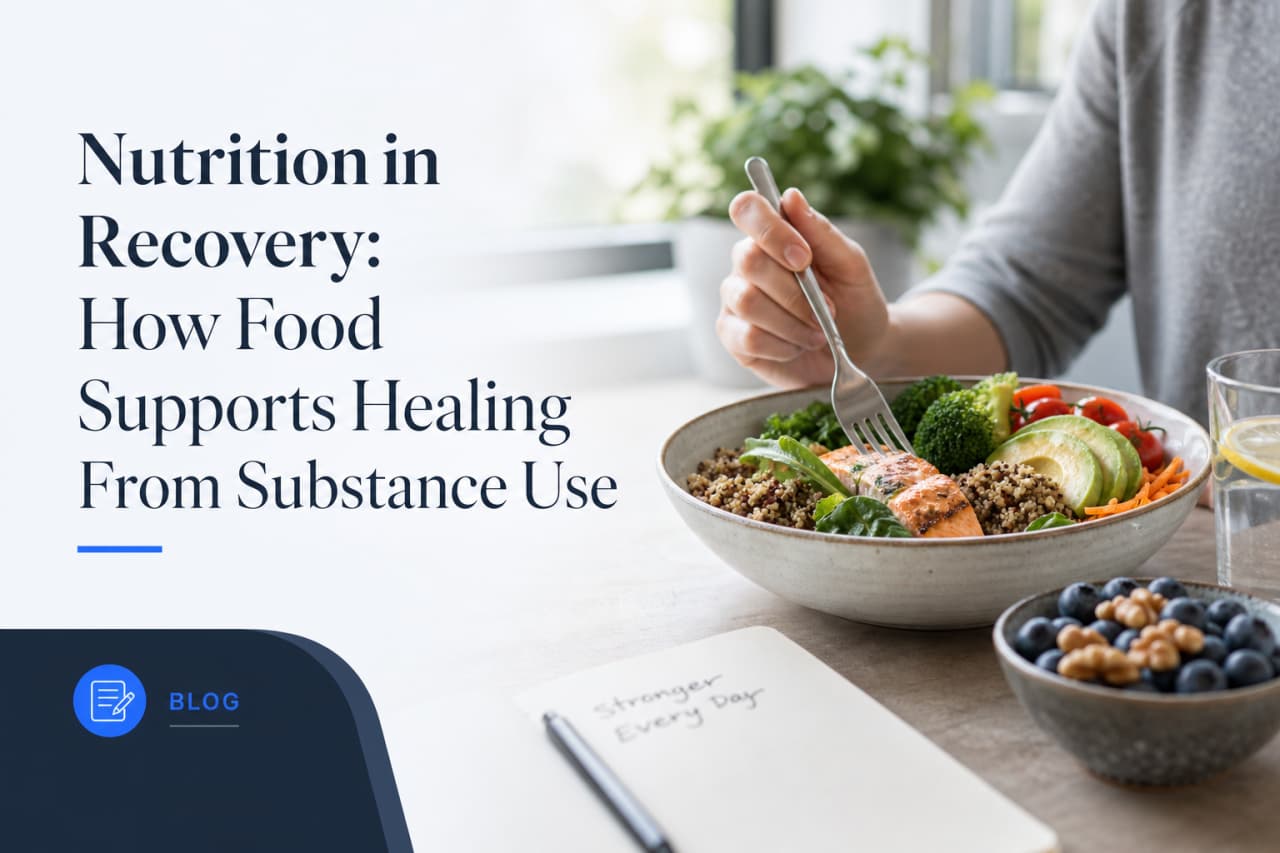
Breakfast could be oatmeal with walnuts and berries plus two eggs, followed mid-morning by Greek yogurt with a spoonful of ground flaxseed. Lunch might be grilled chicken over leafy greens with quinoa, chickpeas, and an olive oil dressing, and an apple with almond butter and a glass of water carries most people through the afternoon. Dinner could be baked salmon with roasted sweet potato and steamed broccoli, and if hunger shows up in the evening, whole-grain toast with avocado or a cup of kefir works well.
Caffeine deserves a word. Moderate coffee is usually fine, but energy drinks combine large doses of caffeine with sugar, which can worsen anxiety, sleep problems, and blood sugar swings. If sleep is poor or anxiety is high, cut caffeine after noon and talk with your treatment team.
3 Practical Tips to Build Sustainable Eating Habits
Start with timing before food choices. Three meals and one or two snacks at roughly the same hours each day will do more for mood and energy than a perfect ingredient list eaten erratically, and even a small snack like an apple or a handful of baby carrots helps the body settle into the schedule (Tranquil Shores).
Keep easy protein on hand, such as hard-boiled eggs, canned tuna, and nuts, so hunger doesn't catch you unprepared. Cut back on heavily processed foods gradually rather than overnight, since rigid rules tend to collapse under stress. Swapping one processed snack a day for whole food is a reasonable first step.
Watch for new compulsions. Some people replace a substance with sugar, bingeing, or severe restriction. If eating starts to feel out of control, raise it with your clinicians, because disordered eating often overlaps with mental health conditions that respond to treatment.
Self-Assessment Checklist for Nutrition in Recovery
This checklist is a starting point for a conversation with your care team, and it does not diagnose anything on its own.
Pay attention if you regularly go more than five hours awake without eating, or if most meals come from packages, drive-throughs, or vending machines. Feeling shaky, irritable, or craving substances when hungry counts, as does drinking energy drinks or several sodas a day. Unexplained weight loss or gain in recent months, numbness, tingling, poor balance, or memory lapses, and ongoing constipation or stomach pain all belong on the list.
If two or more apply, ask a physician about blood work and a nutrition review. Heavy drinking can cause B vitamin deficiencies that lead to neurological problems, so numbness, tingling, balance problems, or confusion in someone with a history of heavy drinking need prompt medical attention (Avery Lane).
How Faith Recovery Center Builds Nutrition Into Treatment
Our Beverly Hills manor serves chef-prepared meals tailored to each client's dietary needs, which means someone recovering from alcohol use disorder can get easy-to-digest food during detox and fuller, protein-focused meals as appetite returns. With a maximum of 8 patients at a time, the kitchen and clinical team know each person's health picture rather than feeding a crowd from one menu.
Medical protocols, including detox assessment and vitamin replacement when clinically indicated, are overseen by Dr. Jason Giles, M.D., a board-certified physician with expertise in addiction medicine. Our psychiatrist, Dr. Julio Meza, M.D., leads dual diagnosis care, which matters because depression and anxiety often affect appetite and eating patterns. Nutrition sits alongside CBT, DBT, yoga, fitness, and life skills education in a residential stay that typically runs 30 to 90 days.
Clients can step down to PHP and IOP with the same team, carrying their eating habits into daily life. We are Joint Commission accredited, licensed by the California Department of Health Care Services, and LegitScript certified, with 24/7 clinical support throughout.
When to Seek Help From a Dietitian or Treatment Team
Get professional help if you are entering alcohol rehab or detox, have lost significant weight, have diabetes or liver disease, or notice signs of disordered eating. A registered dietitian can design personalized nutrition around lab results, medications, food allergies, and preferences, while your physician handles deficiencies that need medical treatment. The SAMHSA National Helpline is also available free, 24/7, for treatment referrals.
Frequently Asked Questions About Nutrition in Recovery
Why are B vitamins so important during alcohol detox?
Alcohol use can cause B vitamin deficiencies, and low levels can lead to anemia and neurological problems such as "wet brain," a syndrome that stops the brain from writing new memories (Avery Lane). Thiamine (B1) is the one clinicians watch most closely. Any vitamin replacement during detox, including dosing, should come from your medical team.
How does protein help rebuild neurotransmitters?
The brain makes serotonin and dopamine from amino acids found in protein, specifically tryptophan and tyrosine. Eating protein regularly supplies those raw materials as the brain recalibrates. It supports mood recovery but does not replace therapy or medication when those are needed.
Can eating well prevent relapse?
No diet prevents a return to use on its own. Steady blood sugar, corrected deficiencies, and better sleep can reduce physical triggers that feel like cravings. Nutrition works as one support alongside therapy, medical care, and aftercare planning.
Should I take supplements on my own?
It is safer to get blood work first. Some vitamins cause harm in high doses, and supplements can interact with medications used in treatment. A physician can tell you which deficiencies you actually have.
Will insurance cover treatment that includes nutritional care?
Meals and medical nutrition care are part of our residential and detox programs. We work with many private PPO plans, including Aetna, Anthem, Blue Cross Blue Shield, Cigna, and UnitedHealthcare, and we verify your benefits for free and confidentially before you commit.
Speak With Faith Recovery Center Admissions 24/7 at (844) 598-5573
If substance use has taken a toll on your body, or on someone you love, recovery can start with a confidential call. Faith Recovery Center's admissions team is available 24/7 at (844) 598-5573, and many clients are admitted within 24 to 48 hours. Call admissions to verify your insurance and ask about detox and residential openings, or reach us through our contact page at /contact/.