
Blog
October 14, 20268 min read
Executive Privacy in Luxury Addiction Treatment
Executive privacy rehab explained: confidentiality layers, work access, legal protections, and a vetting checklist before you choose a program.
Faith RecoveryRead
4.8 · 75 Google Reviews · Beverly Hills
Three medications are FDA-approved to treat opioid use disorder. MAT opioid treatment pairs one of them with counseling so the body stabilizes while the work of recovery happens.
Faith Recovery
Editorial Team
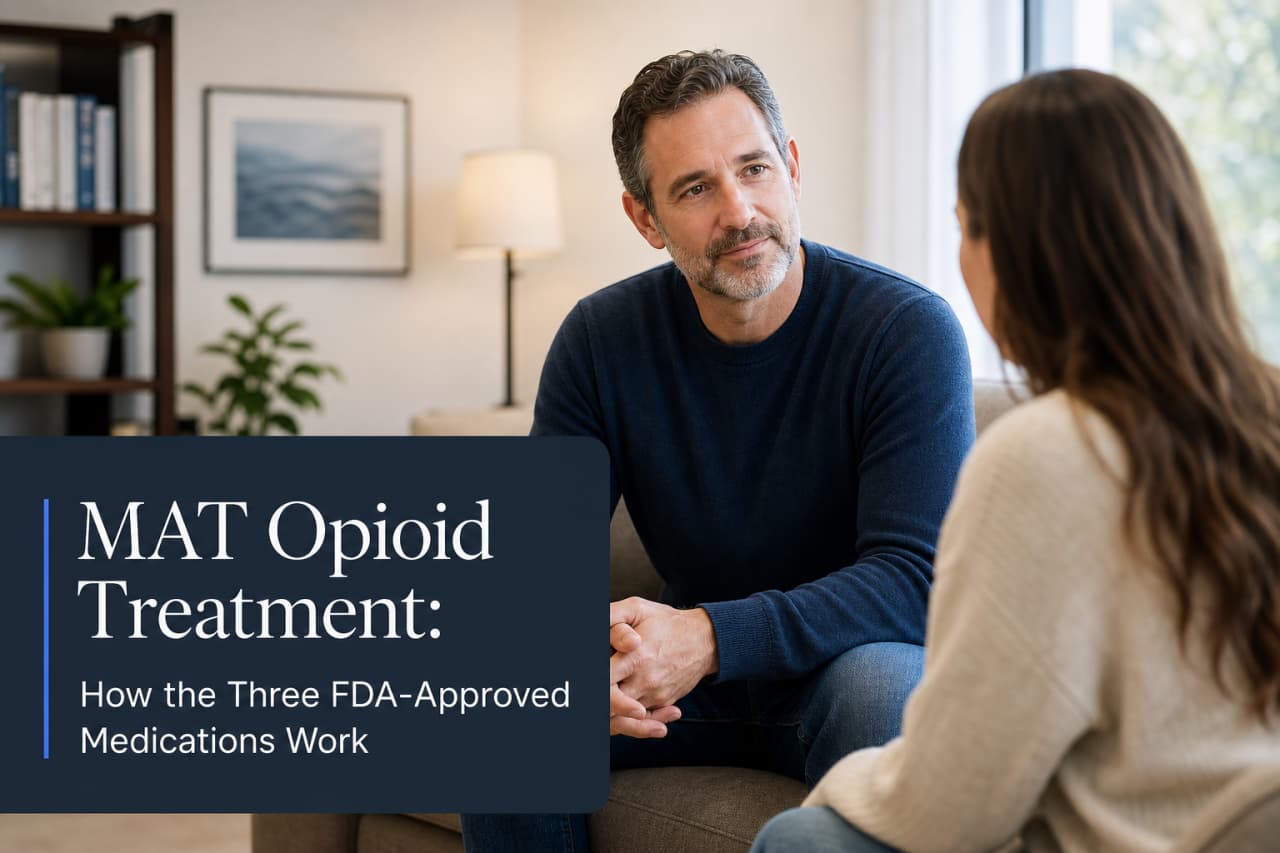
Three medications are FDA-approved to treat opioid use disorder. MAT opioid treatment pairs one of them with counseling so the body stabilizes while the work of recovery happens.
Three medications are FDA-approved to treat opioid use disorder: methadone, buprenorphine, and naltrexone. MAT opioid treatment pairs one of them with counseling and behavioral therapy so your body stabilizes while you do the work of recovery at the same time (NACo). At Faith Recovery Center in Beverly Hills, medication-assisted treatment is available when a physician decides it fits your situation. Our medical and psychiatric team coordinates it alongside detox, residential care, and outpatient programming in the same house.
Medication-assisted treatment uses a prescribed medication to quiet cravings and withdrawal while therapy addresses the thinking, habits, and stressors behind opioid use. The medication alone is never the whole plan (New Season). Medication gives you enough steadiness to show up for therapy, and therapy gives you tools no prescription can supply.
Repeated opioid use trains the brain's receptors to expect the drug, and stopping sets off aches, sweating, vomiting, and cravings that can last for days. That is why willpower on its own fails so many people who genuinely want to quit. Medication can help restore more normal brain function and reduce cravings so a person can focus on building a steadier daily life (AHCCCS; Brown Health). We frame the goal as stability and a working life in recovery rather than a cure anyone can guarantee.
MOUD stands for medications for opioid use disorder. Many clinicians now prefer that term because research shows the medications themselves produce measurable benefit even for people who are not in counseling, and "assisted" can make the drug sound like an optional add-on (NACo). Both terms describe the same approach, and at Faith Recovery Center counseling stays in the plan either way.
The practical difference among the three is how each one acts on opioid receptors. Methadone activates them fully, buprenorphine activates them partially, and naltrexone blocks them (NACo). The FDA's overview of MAT covers each one in more detail.
Methadone is a long-acting full agonist. It occupies the receptors slowly and steadily, which prevents withdrawal and reduces craving without the rush an illicit opioid produces, and it can blunt the effect of other opioids taken on top of it (AHCCCS). Because it is a Schedule II controlled substance, methadone for opioid use disorder is dispensed only through licensed opioid treatment programs, where patients typically receive a daily dose on site (BHG). Faith Recovery Center is not an OTP, so if methadone is the right fit we say so and help you connect with one.
Buprenorphine, found in Suboxone and in long-acting injectables such as Sublocade, is a partial agonist. It activates receptors enough to relieve cravings and withdrawal but does not produce the euphoria and sedation of heroin, and it carries a low overdose risk (AHCCCS; IDPH). Unlike methadone, it can be prescribed in an ordinary medical office. The federal X-waiver requirement was removed as of December 9, 2022, so any practitioner with a DEA registration covering Schedule III medications may now prescribe it where state law allows (NACo). Older articles describing waiver training and patient caps are out of date.
Timing of the first dose matters, because buprenorphine can push other opioids off the receptors and trigger a sudden, severe precipitated withdrawal. Clinicians wait until a person is already in withdrawal before starting, commonly using the Clinical Opiate Withdrawal Scale. A COWS score of 13 to 24 indicates withdrawal is under way and the first dose is unlikely to make things worse, while someone scoring under 13 is usually asked to begin the following day (PMC).
Naltrexone is an opioid antagonist. It produces no opioid effect of its own, has no potential for misuse, and blocks other opioids from binding, which removes the reward of using (AHCCCS). The extended-release injectable, Vivitrol, is given once a month. A person who still has opioids in their system should not take it, because it can bring on sudden withdrawal, so naltrexone usually follows a completed medical detox rather than replacing one.
The most common objection we hear from families is that MAT swaps one drug for another (Choose Change CA). Addiction means compulsive use despite harm, chasing a high, and losing control over the dose. A stable, prescribed dose of methadone or buprenorphine does the reverse. The dosage used in treatment does not produce the high associated with misuse, and when the medications are taken as prescribed they do not create a new addiction (IDPH; Brown Health). Physical dependence on a medication and addiction are different things.
A closer comparison is a person with diabetes taking insulin every morning, which nobody describes as trading one problem for another. The National Institute on Drug Abuse and state health agencies report that these medications reduce illicit opioid use, overdose deaths, and transmission of HIV and hepatitis C while improving retention in treatment (IDPH). People taking prescribed methadone or buprenorphine are roughly half as likely to die of overdose as people in no treatment (NACo). Leaving medication too early is risky partly because tolerance falls fast, which is one reason we plan the taper, if there is one, with the same care as the start.
Related reading
Dr. Jason Giles, a board-certified physician with deep experience in addiction medicine, oversees our medical protocols from detox assessment through MAT. Dr. Julio Meza, our psychiatrist, handles co-occurring conditions such as depression, anxiety, PTSD, and bipolar disorder, which show up alongside opioid use more often than families expect. We cap the house at 8 patients, so the doctor adjusting your dose knows your history and how you slept last night.
Medication sits inside a full treatment plan that includes individual therapy using CBT and DBT, EMDR for trauma, group sessions, family therapy, and relapse prevention work. You can move from physician-supervised detox, which often runs 5 to 10 days, into residential treatment of 30 to 90 days, and then into PHP or IOP without changing buildings or clinicians. Admission usually includes lab work and a prescription monitoring check before medication begins, which is standard practice for programs that follow published MAT guidance (PMC).
Which medication fits comes down to your history and what the examining physician finds. Methadone often suits people with long, heavy opioid use who do well with daily structure at a clinic. Buprenorphine fits many people who want office-based care and the flexibility to keep working or caring for family. Naltrexone suits people who have already finished detox and want no opioid activity in their body at all.
When you call any provider, ask which of the three medications they offer and which doctor manages dosing. Ask how often counseling happens and whether a psychiatrist is on the team for co-occurring conditions. You should also ask who continues the prescription after discharge and whether they verify insurance before you commit to anything.
No doctor's referral is needed to call us, and a family member can call on someone's behalf. Admissions verifies your benefits free of charge, our clinicians run an assessment, and many clients arrive within 24 to 48 hours of the first call. SAMHSA's medication resources are also worth reading for families comparing treatment options.
Yes, methadone and buprenorphine are used in pregnancy, and state health guidance reports that treatment improves outcomes for both mother and baby compared with untreated opioid use (IDPH). Decisions about breastfeeding on either medication belong with your obstetrician and prescriber, who can review your specific situation.
Many private plans cover it, and we work with Aetna, Anthem, Blue Cross Blue Shield, Cigna, UnitedHealthcare, Optum, and most major PPO plans. Coverage differs by plan and by medication, so we verify your benefits free and confidentially before admission.
The blockade usually prevents any effect, and taking large amounts to push through it can cause a fatal overdose. Tolerance also falls during treatment, so a missed injection followed by use carries more overdose risk than the person may expect.
In many cases it can, under federal telemedicine rules that the DEA has revised more than once. Those rules change, so confirm the current requirements with the prescriber you plan to work with.
Tapers happen slowly, with your doctor lowering the dose over weeks or months while counseling continues. Stopping on your own brings withdrawal back and raises overdose risk sharply, so every change should go through the prescriber. Common side effects of both medications include constipation, nausea, sweating, and drowsiness, and your doctor can adjust the plan if they become a problem.
If you or someone you love wants to talk through medication options, our admissions team answers 24 hours a day at (844) 598-5573. We can verify your insurance on that same call and explain exactly what admission to Faith Recovery Center looks like.
About the author
Helpful educational resources from Faith Recovery.
In this article
Continue reading
Executive privacy rehab explained: confidentiality layers, work access, legal protections, and a vetting checklist before you choose a program.
Residential treatment at Faith Recovery Center runs 30 to 90 days based on need. Here's how to sort which relationships support your sobriety and which ones wear it down.
Stress management relapse prevention explained: warning signs, the stages of relapse, coping strategies, and when to get professional support.
Many clients at Faith Recovery Center are admitted within 24 to 48 hours of a first call, so the conversation with family often happens fast.
Most cravings crest within about 15 to 30 minutes, even though one in progress can feel permanent. If you can stay safe until the peak passes, the urge loses its grip.
Substance use disorder can lead to malnutrition and vitamin deficiencies, and blood sugar swings from poor dietary choices can trigger cravings. Here is how to eat for recovery.
More from Blog
View allReady to take the next step
Faith Recovery Center offers confidential admissions, insurance verification, and evidence-based treatment in a private Beverly Hills manor — 24 hours a day.