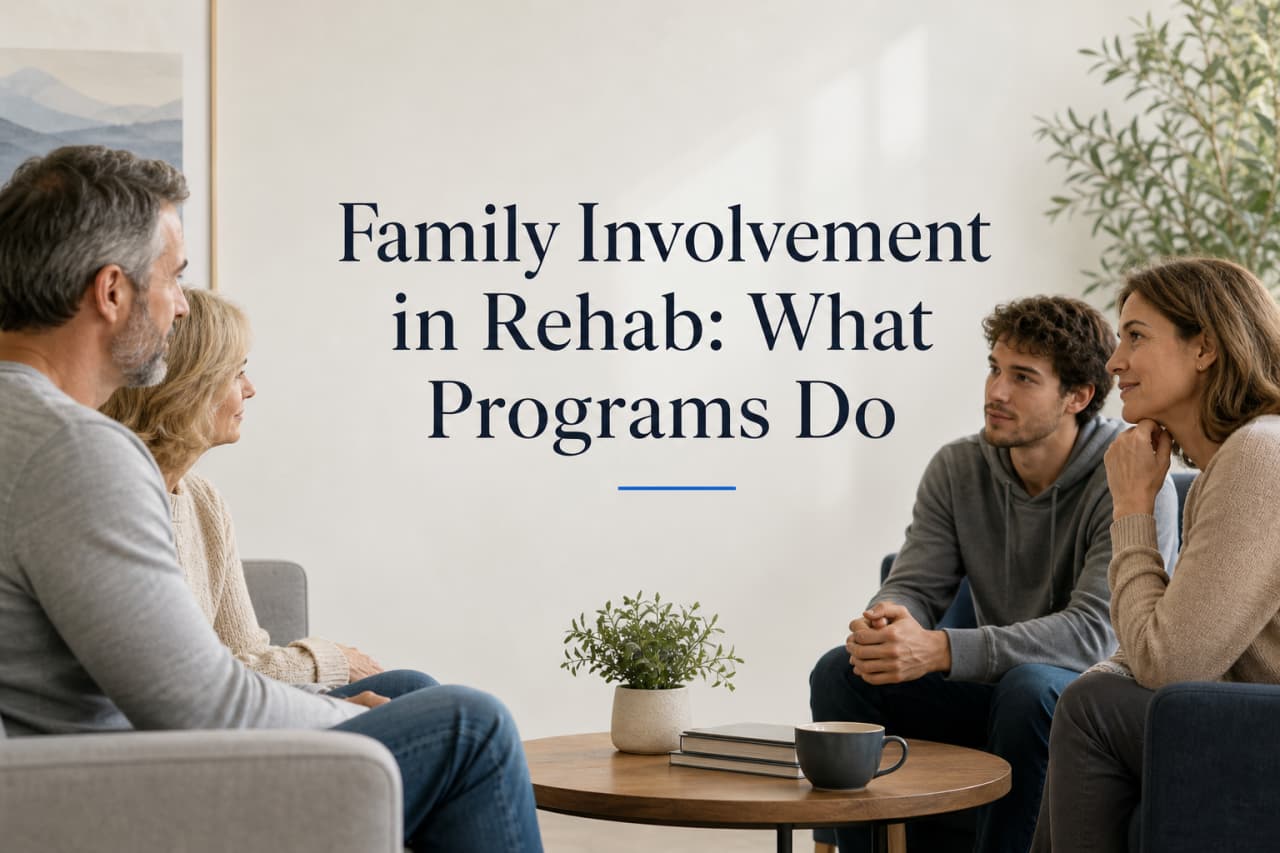
A patient who finishes 30 to 90 days of residential care returns to the same kitchen, the same arguments, and the same people who lived through the addiction with them. Family involvement in rehab means those people take part in structured sessions, education, and discharge planning while their loved one is in care. At Faith Recovery Center in Beverly Hills, family therapy and education are part of recovery support, and family visitation typically begins after a patient's initial stabilization.
This guide covers what that participation looks like, which family therapy approaches programs use, where it gets hard, and how to support someone once they come home.
What Family Involvement in Rehab Means
Family therapy is a specialized form of counseling that focuses on the relationships between family members, particularly those affected by addiction, according to Gateway Rehab. A therapist looks at how relatives talk, argue, protect each other, and avoid hard subjects, then helps everyone practice different patterns.
"Family" is defined broadly. A partner, an adult child, a sibling, a close friend, or a longtime roommate can all take part if the patient wants them there and the clinical team agrees it will help. The practical test is who will be in this person's daily life after discharge.
Why Family Support Matters in Addiction Recovery: 30 to 90 Days and After
Some treatment providers report that people with strong family support are more likely to remain in treatment and maintain long-term sobriety, as Mainspring Recovery describes. That points to an association, not a guarantee. Families who show up do not cause sobriety, but they change the environment a person returns to after a residential stay of 30 to 90 days.
The mechanism is practical. If the household has learned new ways to handle conflict and spot early warning signs, the patient is no longer the only one who changed, and the stressors that surrounded their use carry less weight.
Family wellbeing is part of the patient's outcome too. Relatives who have spent months or years managing a crisis often arrive exhausted, angry, or anxious. A tense, highly critical home, which clinicians call high expressed emotion, has been studied for decades as a predictor of psychiatric relapse, according to Rehabilitation Authority. That is no reason to blame families, but it is a good reason to give them education and support of their own.
Ways Families Participate During Treatment: Three Layers
Participation usually happens in three layers, starting small and building as the patient stabilizes. At Faith Recovery Center, that progression begins once initial stabilization is complete and the clinical team sets a schedule, which for residential patients falls inside a typical 30 to 90 day stay.
Family Therapy Sessions
In family therapy sessions, a licensed therapist guides conversations the family usually cannot have alone. Early sessions tend to focus on what happened and how each person was affected. Later sessions shift to communication, conflict resolution, and specific agreements for life after discharge. Remote participation by phone or video is often possible for relatives who live far away.
Family Education and Support Groups
Education covers how addiction affects the brain, what withdrawal and early recovery look like, and how co-occurring conditions such as anxiety or depression interact with substance use. Outside the program, support groups like Al-Anon and Nar-Anon give relatives a place to talk with people who have lived the same thing.
Visits, Family Weekends, and Aftercare Planning
Many programs run a family week or weekend with several days of education and joint sessions, while others schedule visits individually. Either way, the goal is to reconnect in a structured setting and bring the family into aftercare planning before the patient leaves.
Five Common Family Therapy Models in Rehab, From Structural to CRAFT
Therapists choose approaches based on the family's patterns and goals, and a single course of family therapy may borrow from more than one. The five models below are the ones families hear about most often, and Gateway Rehab's overview of family therapy in addiction recovery describes several of them.
Structural and Strategic Family Therapy
Structural family therapy focuses on reorganizing family dynamics to create healthier boundaries and relationships, per Gateway Rehab. In practice, a therapist maps who holds authority, who is too close, and who is shut out, then works to reset those roles. Strategic therapy is brief and targets one problem pattern, such as a nightly argument that ends with someone drinking, and assigns concrete tasks to break it.
Multidimensional Family Therapy and Solution-Focused Approaches
Multidimensional family therapy was developed largely for adolescents and works with the young person, parents, and outside systems like school at the same time. Solution-focused therapy skips long analysis of the past and asks what is already working, then builds on it. Functional family therapy, a related model, emphasizes better communication and trust through practical strategies, as Gateway Rehab notes.
Behavioral Couples and Family Counseling
Behavioral couples therapy pairs recovery agreements with communication skills training for partners. Community Reinforcement and Family Training, or CRAFT, teaches relatives to reward sober behavior, step back from enabling, and choose good moments to suggest treatment. NIDA lists family-based approaches among research-supported options.
Benefits for the Person in Recovery and the Family After a 30 to 90 Day Stay
For the patient, benefits usually show up as fewer surprise conflicts at home, clearer expectations, and people who recognize early warning signs of a return to use. For relatives, the gains are often relief and skill, because you learn what is your responsibility and what is not. Both sides tend to feel the difference within the first weeks after a 30 to 90 day stay ends.
Common counseling goals include recognizing enabling, meaning actions that shield someone from the consequences of use, like covering missed work or paying off debts. Families also work on setting boundaries that protect the household without cutting off the relationship, and on rebuilding trust through small, verifiable commitments. Removing alcohol, pills, and other triggers from shared spaces helps create a recovery-focused home, as Pathways Recovery advises. Many families also plan ahead for how they will respond if a recurrence happens.
Challenges and Barriers to Family Involvement
Not every family is ready, and not every patient wants them involved. Distance, work schedules, old resentments, and a relative's own substance use can all get in the way. Codependency, where a family member's sense of stability depends on managing the patient, can make boundaries feel like abandonment at first.
Some situations call for caution. If there is a history of abuse or ongoing danger, therapists may limit contact or work with family members separately, because safety comes before reunification.
Is Family Involvement Right for Your Situation? A Decision Framework
Full participation fits when relatives will share a home or daily life with the patient after discharge, when both sides are willing, and when there is no active safety risk. Start with education and your own support group if the patient is not ready yet, since your progress still changes the home. Choose separate or limited involvement when there is abuse, a relative in active addiction, or a court order in place. In every case, the patient and clinical team decide together, and you can revisit the choice as treatment moves forward.
How Family Support Works at Faith Recovery Center
Faith Recovery Center treats a maximum of 8 patients at a time in a private Beverly Hills manor. With a census that small, the clinicians who work with your loved one every day are the ones who talk with you, and they know the history behind each family session.
Family therapy is available within residential treatment when clinically appropriate, alongside individual CBT, DBT, and EMDR. Family visitation typically begins after initial stabilization, and the admissions and clinical team outlines the schedule and family therapy opportunities at intake. When a patient has a co-occurring condition, psychiatrist Dr. Julio Meza integrates dual-diagnosis care into the plan, so families learn how the mental health side affects recovery too.
Because detox, residential, PHP, IOP, and aftercare all happen within one continuum, relatives do not have to restart with a new team at each step down. Discharge planning covers relapse prevention and ongoing support. You can also call admissions on your loved one's behalf at (844) 598-5573, any time of day.
Questions to Ask a Rehab About Its Family Program
Ask whether licensed therapists lead family sessions and how often they are offered. Find out when visits can start, how they are scheduled, and whether relatives can join sessions remotely. Ask how your loved one's privacy is handled and what you will be told, whether families are included in discharge and aftercare planning, and whether the facility is state licensed and accredited. Faith Recovery Center holds California DHCS license 190130AP and Joint Commission accreditation.
How Families Can Support a Loved One After Rehab
Recovery after discharge runs on consistency more than grand gestures. Keep the home free of substances, as Pathways Recovery recommends, show up for aftercare sessions you have agreed to, and hold the boundaries you set in treatment even when it is uncomfortable. A clear rule like "I won't lend money" often makes warmth easier because resentment has less room to build.
Take care of yourself as well. Relatives who keep their own therapy or group meetings tend to respond to setbacks with steadier judgment, and that steadiness helps the whole household.
Frequently Asked Questions
How should families rebuild trust after rehab?
Trust returns through small promises kept over time, like showing up to meetings or sharing a schedule. Expect it to take months, and name specific agreements in family therapy so progress is visible to everyone.
Can rehab share treatment information with family without consent?
Generally no. Federal privacy rules, including 42 CFR Part 2, require the patient's written consent for most disclosures, with narrow exceptions such as emergencies. Faith Recovery Center does not share information without explicit consent except as required by law.
What if my loved one refuses family therapy or treatment?
You can still get help for yourself through Al-Anon, Nar-Anon, or a counselor trained in CRAFT. CRAFT teaches you to reinforce sober behavior and step back from enabling, which can make treatment more appealing to your loved one over time.
Does insurance cover family therapy during addiction treatment?
Coverage depends on your specific plan and how the service is billed. Faith Recovery Center offers free, confidential benefits verification with many PPO plans, including Aetna, Cigna, Anthem, and UnitedHealthcare, so you know what is covered before admission.
Can family members visit during inpatient rehab?
Yes, in most programs, once the patient has stabilized. At Faith Recovery Center, visits typically begin after initial stabilization, and the clinical team outlines the schedule at intake.
Can family members go to rehab together?
Each person needs their own assessment and treatment plan, even when two relatives both live with substance use disorders. Joint family sessions can still happen when both are clinically ready and the team agrees.
If someone you love needs care, or you want to understand how family involvement would work in their treatment, call Faith Recovery Center confidentially at (844) 598-5573 or reach our team through the contact page. You do not need a referral, and asking questions creates no obligation.