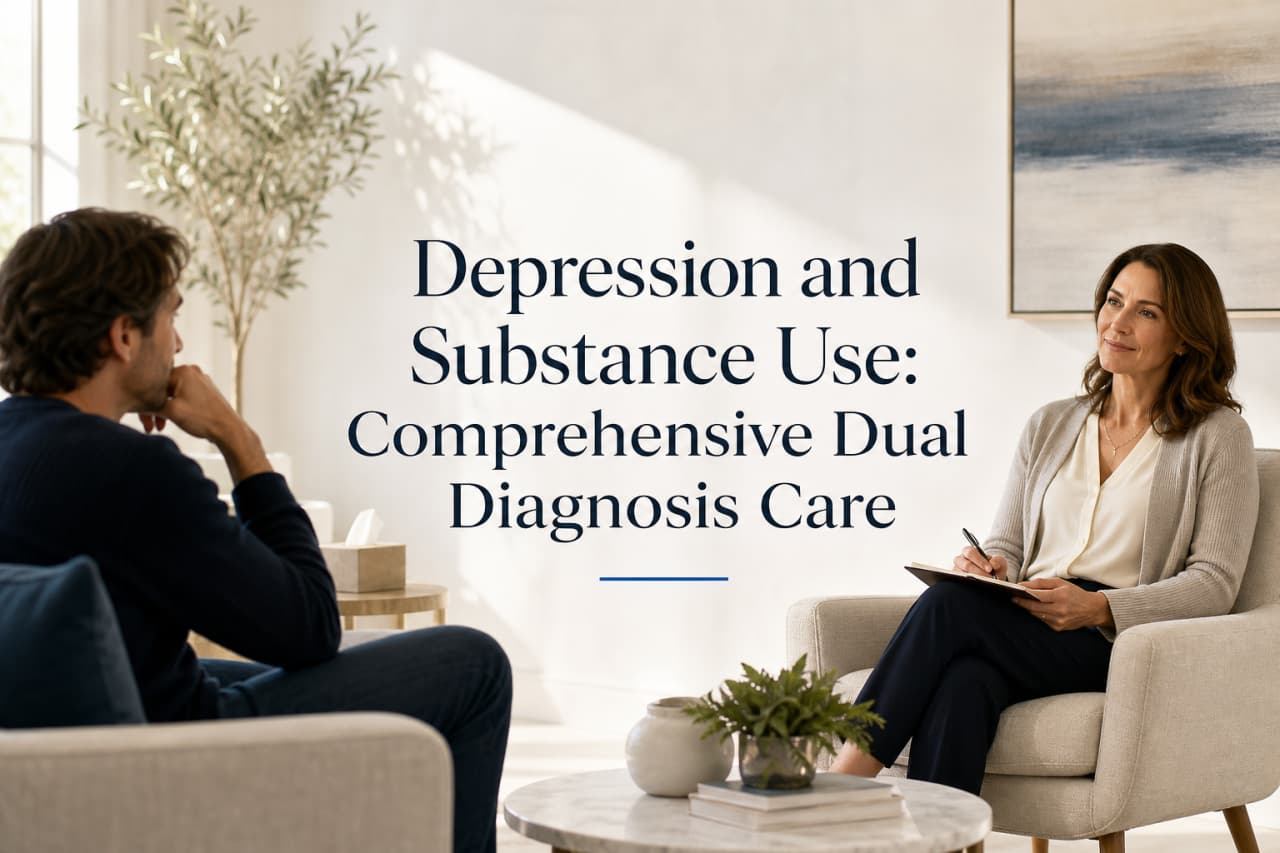
Depression and addiction can affect the same person, with overlapping symptoms that can make diagnosis difficult. We treat that pairing as one clinical picture rather than two problems scheduled weeks apart. When low mood drives use, or when alcohol and drugs deepen a depressive disorder, sequential care leaves gaps that integrated dual diagnosis work closes.
Family members often notice the pattern before the person does. Energy drops, sleep fractures, and use climbs, while a primary care visit may catch one piece and miss the other. This guide covers what depression is, how it and addiction feed each other, which levels of care fit severe cases, and how our team builds a single plan for both.
If you are thinking about suicide or need crisis support, call or text 988. For an overdose or another life-threatening emergency, call 911 for immediate help.
What Depression Is and How It Differs From a Bad Stretch
Depression is a clinical mood disorder, not a personality flaw. A major depressive episode typically means depressed mood or loss of interest most of the day, nearly every day, for at least two weeks, plus changes in sleep, appetite, concentration, or energy. At Faith Recovery Center, mood assessment starts in the first clinical interview so staff can separate a true mood disorder from a rough week.
Mood disorders as a group include major depressive disorder, persistent depressive patterns, bipolar disorder with depressive phases, seasonal patterns, and postpartum onset. Symptoms can look quiet from the outside, such as withdrawal from friends, slower speech, or a flat affect that relatives misread as laziness. Some people also have suicidal thoughts and need urgent professional help.
Mood disorders can sit beside anxiety, eating disorders, ADHD, and trauma-related conditions. When any of these overlap with substance use, the picture gets more complicated, though it stays treatable with the right team.
Major depressive illness versus temporary low mood
Everyone feels down after a loss or a hard season. Major depression lasts longer, impairs work or relationships, and does not lift when circumstances improve. People who meet full criteria need structured care, and clinicians look at duration, severity, and functional impact before naming a diagnosis.
Bipolar disorder and other mood disorders
Bipolar disorder includes depressive episodes that can look identical to unipolar depression until a history of elevated or irritable periods emerges. Mislabeling it as simple depression can send treatment down the wrong medication path. Accurate staging of the mood disorder matters before any long-term prescription plan.
How Depression and Addiction Feed Each Other
The relationship runs both ways. Some people start with a mood disorder and later develop a substance use disorder, while others start with alcohol or drug use and later meet criteria for depression. Shared genetics, trauma, chronic stress, and overlapping brain chemistry all contribute.
Self-medication is the pattern we hear most on admissions calls. Someone with untreated mood symptoms drinks to quiet rumination, uses stimulants to push through a loss of interest, or takes sedatives to force sleep. The short-term relief trains the brain to reach for the substance again, and over months the original mood problem stays untreated or grows worse.
Addiction then worsens mood in its own right. Alcohol is a central nervous system depressant, many opioids and sedatives blunt reward signaling, and stimulant crashes leave people flat and hopeless. Prolonged heavy use can alter brain chemistry enough to produce substance-induced depression in someone with no prior mood history.
Addiction as a cause of depression
Addiction can cause depression through direct neurochemical effects, sleep disruption, poor nutrition, social isolation, and the stress of consequences. Quitting suddenly can also unmask or temporarily intensify underlying mood symptoms, which is one reason medically supervised detox matters.
How drugs deepen mood symptoms
The effect depends on dose, duration, and the person. Heavy alcohol use, benzodiazepine patterns, opioid dependence, and stimulant binge-crash cycles all disrupt the reward system. Natural dopamine and serotonin signaling can feel blunted without the drug, which shows up as depressive symptoms, an inability to feel pleasure, and stronger cravings.
Co-Occurring Disorders and Why Diagnosis Takes Time
Dr. Julio Meza, M.D., the licensed psychiatrist on our clinical team, evaluates substance use and mental illness as one connected picture. Dual diagnosis means a substance use disorder and a mental health condition present at the same time. Depression is a frequent member of that category, alongside anxiety, ADHD, bipolar disorder, and trauma. Treating only one side leaves the other free to pull the person back into use.
Diagnosis is genuinely hard. Intoxication can mimic mania or panic, and withdrawal can look like a major depressive crash. A clearer read often comes after the acute effects settle, so our psychiatric team weighs history, timeline, family patterns, and prior medication responses to avoid over-diagnosing or missing a mood disorder.
Integrated care addresses both conditions together, rather than separating mental health support from substance use treatment. NIMH describes this coordinated approach, which can include behavioral therapies, medication, and care management.
Childhood trauma and later risk
Childhood trauma is a shared risk factor that can link early emotional injury to later depression and substance problems. It shapes stress response, trust, and coping, and people with unresolved trauma may use drugs or alcohol to numb flashbacks or emptiness. Trauma-informed care and EMDR are part of our residential programming for that reason.
Nutrition, physical health, and cravings
Irregular meals, nutritional gaps, and sleep loss make depressive symptoms louder and decisions harder. Our chef-prepared meals and fitness access support the medical and psychiatric work while the brain and body restabilize.
Substances That Commonly Pair With Depression
Alcohol is one of the most frequent partners of depression in our 8-patient program. People often describe evening drinking that began as a wind-down and became nightly dependence. Opioids, fentanyl, heroin, sedatives, cocaine, methamphetamine, and marijuana can also intertwine with mood disorders.
Families sometimes ask which addictions are worst. Severity is clinical, not a contest, but alcohol, opioids, and sedatives often carry the highest medical risk during withdrawal and the strongest ties to mood collapse. Any pattern that controls your day deserves a professional assessment.
Depression and substance use can also travel with eating disorders, or with anxiety that makes people avoid treatment settings. ADHD traits can complicate impulsivity around use. We screen across these conditions so the plan matches the whole person.
How Faith Recovery Center Treats Depression and Addiction
Faith Recovery Center is a physician-led boutique program in a private Beverly Hills manor at 2200 Coldwater Canyon Dr. We keep a maximum of 8 patients at a time so clinicians know each history in detail. Despite the name, we are not a denomination-specific religious program. The name reflects hope and renewal, and treatment is clinical and evidence-based with room for personal spirituality if you want it.
Our continuum covers medical detox, residential care, medication-assisted treatment when indicated, partial hospitalization, intensive outpatient, outpatient treatment, and aftercare. We are Joint Commission accredited, licensed by the California Department of Health Care Services, and LegitScript certified. Clinical and medical support runs 24 hours a day.
Dr. Jason Giles, M.D., a board-certified physician with deep addiction medicine experience, oversees medical and detox protocols. Dr. Meza integrates psychiatric care for depression, bipolar disorder, anxiety, and trauma alongside the substance work. That pairing keeps both conditions in the same plan from day one.
Levels of care for severe dual diagnosis
Residential care is often the right call when depression is severe, suicidal thoughts are active, home is unstable, or outpatient attempts have failed. Medical detox, often about 5 to 10 days, comes first when physical dependence is present, and residential stays typically run 30 to 90 days based on need. PHP and IOP then step people down while structure remains, and aftercare planning begins during the stay because mood work that stops at discharge puts recovery at risk.
Private setting and daily structure
Private suites and bathrooms, chef-curated meals, gardens, a pool, a gym, and outdoor lounge space protect dignity while high-acuity care runs in the background. Days blend individual therapy, group work, psychiatric follow-up, yoga, mindfulness, and art therapy. Family therapy can begin after initial stabilization, on a schedule set with the clinical team.
Therapies and Medication for Both Conditions
Our core approaches are cognitive behavioral therapy, dialectical behavior therapy, motivational interviewing, EMDR and other trauma work, and medication management under psychiatric supervision. Individual and group formats help people map the triggers behind both mood collapse and use. No single modality fits everyone, so the plan is individualized within our small setting.
CBT for co-occurring depression and addiction
CBT helps you catch the chain of thought, feeling, and behavior that links a depressive spiral to a drink or a pill. It builds coping strategies, activity scheduling for loss of interest, and relapse-prevention skills. It works best when paired with medical care.
Dialectical behavior therapy and motivational interviewing
DBT focuses on emotion regulation and distress tolerance, which helps when urges to self-harm or use spike under stress. It is especially useful when mood instability sits beside substance use. Motivational interviewing strengthens your own reasons for change without shame, which helps people caught between wanting help and fearing it.
Medication management and non-addictive options
Antidepressants, including SSRIs when clinically appropriate, can stabilize mood in recovery, and many are non-addictive and produce no euphoria. Medication-assisted treatment can support opioid recovery while psychiatry manages mood. Every decision happens under professional supervision, with attention to interactions, any history of bipolar disorder, and withdrawal status.
We do not apply one-size protocols. Sleep disruption, anxiety, and prior medication failures all shape the choice, and past records help us avoid repeating failed trials. The goal is mood stability that makes therapy stick, not sedation that masks symptoms.
Support groups and peer recovery
Peer groups can reinforce skills learned in treatment. Options include AA, SMART Recovery, and Refuge Recovery, matched to your preference. They do not replace clinical care, but they give structure after discharge, when cravings and mood dips become more frequent.
Warning Signs, Relapse Risk, and When to Reach Out
Warning signs that depression is returning during recovery include low mood, sudden loss of interest in routines that were working, sleep collapse, rising guilt, isolation, and quiet planning around drugs or alcohol. Missed therapy sessions and secrecy with family matter too. If you notice them, call Faith Recovery Center at (844) 598-5573 at any hour, and reach out before a full return to use.
Many people assume white-knuckling a low mood will protect their sobriety, but the opposite is usually true. Undertreated depression raises the risk of returning to use because the pain that once drove it is still there. If safety is at risk, contact emergency services right away.
NIDA explains that returning to use does not mean treatment has failed. A clinician can help you decide whether to resume treatment, adjust the plan, or consider another approach.
If you are seeking treatment for a loved one, you can call on their behalf. Ambivalence is normal, and several conversations before admission are fine. Our admissions line is confidential and open around the clock.
Insurance, Admissions, and Next Steps
Many private PPO plans help cover integrated care. Faith Recovery Center works with Aetna, Anthem, Blue Cross Blue Shield, Cigna, UnitedHealthcare, Optum, Humana, Highmark, and most major PPO plans. Verification is free and confidential, sometimes an entire stay is covered, and private pay is available. Cost varies with length of stay and clinical needs, so we do not quote a standard price.
Admission follows five steps: a confidential call or form, insurance verification, a clinical assessment of substance use and mental health history, arrival into a private suite, and the start of detox or therapy as indicated. Many people arrive within 24 to 48 hours, and no doctor referral is required.
Bring photo ID, insurance cards, a medication list, emergency contacts, comfortable clothing, and prescribed medications in original bottles. Leave valuables, alcohol, and non-prescribed substances at home. If you need medical leave documentation for work or school, ask admissions on the first call.
FAQ: Depression and Addiction
What specialized therapies work best for dual diagnosis patients?
CBT, DBT, motivational interviewing, EMDR and other trauma work, family therapy, and supervised medication management form our core set. The best mix depends on trauma history, bipolar risk, and the substances involved. Delivery by one integrated clinical team matters as much as the modality names.
Does quitting substances suddenly worsen underlying depression symptoms?
It can. Withdrawal and the loss of a chemical coping tool often intensify mood symptoms for a period. That is expected and not a sign that recovery is going wrong. Medically supervised detox and early psychiatric support reduce danger and help separate temporary withdrawal effects from an independent depressive disorder.
Are there non-addictive medications for depression in recovery?
Yes. Many antidepressants, including several SSRIs, are non-addictive when used as prescribed. Psychiatry chooses agents based on history, side-effect profile, and any co-occurring bipolar disorder. Medication is paired with therapy and is not a standalone fix.
Is inpatient treatment necessary for severe depression with addiction?
Often it is, when safety risk is high, home is unstable, withdrawal carries medical risk, or outpatient care has already failed. Residential care removes daily triggers and puts medical and psychiatric support in the same building. PHP or IOP can follow once both conditions stabilize.
What insurance options cover integrated depression and addiction treatment?
Private PPO plans frequently include behavioral health benefits that apply to dual diagnosis programs. We verify Aetna, Anthem, Blue Cross Blue Shield, Cigna, UnitedHealthcare, Optum, Humana, Highmark, and other major PPO coverage at no cost. Verify your specific plan before admission rather than assuming network status.
Can untreated depression sabotage long-term addiction recovery?
Yes. When the mood pain remains, the old solution of use stays attractive. Treating addiction alone leaves a door open, and addressing both conditions in one coordinated plan gives recovery a sturdier base.
Talk With Our Admissions Team
If depression and addiction are tangled in your life or in someone you love, you do not have to sort out the order of operations alone. Faith Recovery Center offers discreet, physician-led dual diagnosis care in a private Beverly Hills setting with an 8-patient maximum and a full continuum from detox through outpatient. Call (844) 598-5573 or visit faithrecoverybh.com to verify your insurance and talk through next steps.